
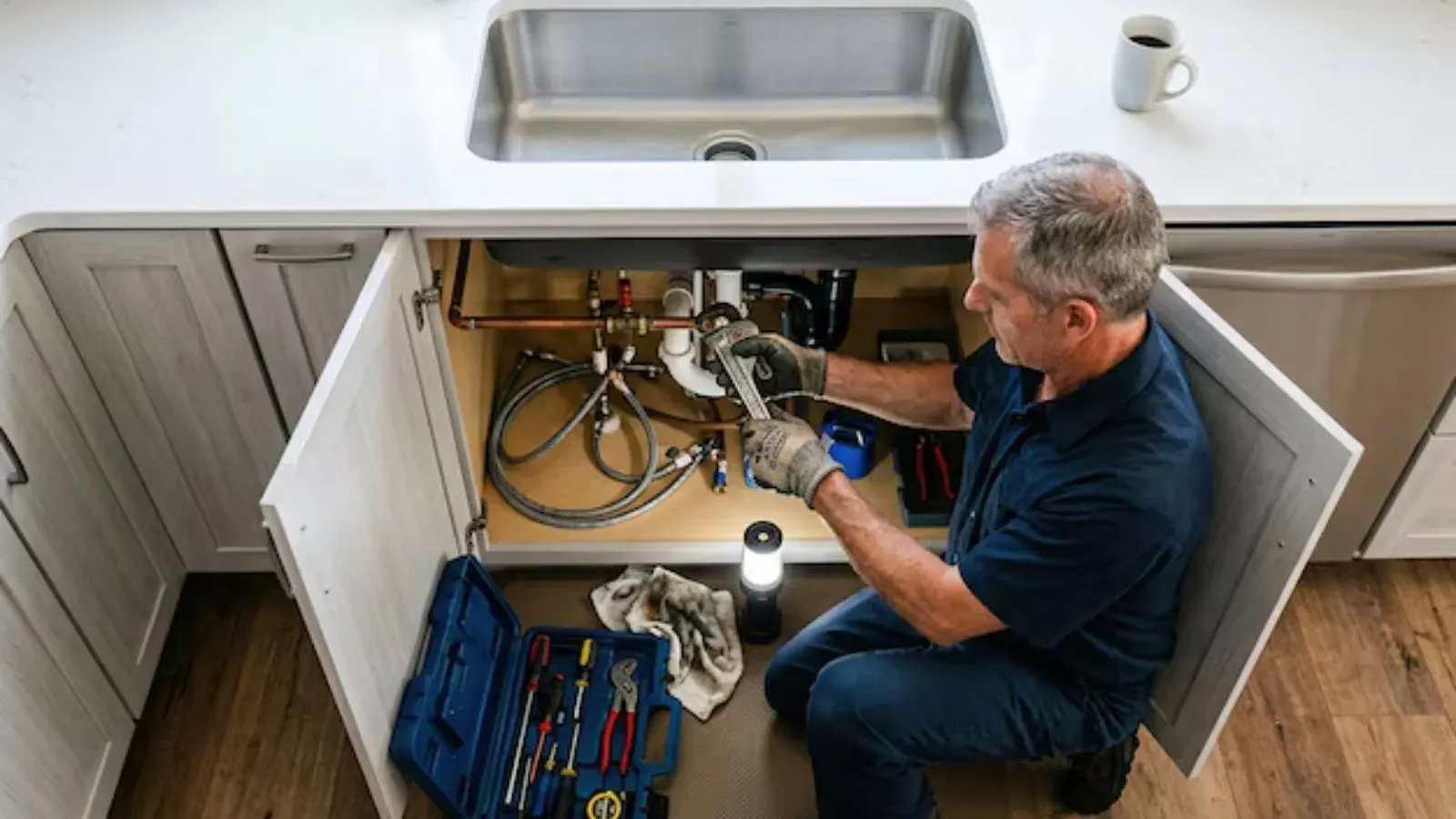
Plumbing Installation in Hanover Park, IL
Adding a bathroom, swapping a kitchen sink or hooking up a new appliance? We install fixtures and lines to code and pull the permits.
What plumbing installation covers
Installation is plumbing that adds something new or replaces an existing fixture or appliance. It is planned work, unlike an emergency repair, so there is time to choose parts and sort out permits. The most common jobs we handle are listed below.
- Kitchen sinks, faucets and garbage disposals
- Toilets, vanities, tubs and showers
- Washing machine and dishwasher hookups
- Gas lines and supply for ranges, dryers and grills
- Outdoor spigots and frost-free hose bibs
- Basement bathrooms, wet bars and laundry rooms
- Water heaters, covered under water heater installation
Each job has its own supply, drain and vent needs. A fixture that drains slowly or gurgles often traces back to a venting or slope mistake made during installation, so getting these details right at the start matters.
How we plan an installation
Review the site
We look at existing supply, drain and vent lines, shutoff valves and the distance to the nearest stack.
Check the code
We confirm what the Illinois Plumbing Code requires for fixture spacing, venting, trap size and backflow protection.
Pull the permit
If the work needs one, we file through Inspectional Services and schedule inspections.
Install and connect
We rough in lines, set fixtures, make supply and drain connections and test for leaks.
Inspect and finish
The village inspects where required, and we go over the fixtures and shutoffs with you.
Call and tell us what you want to add. We will explain what the job needs and how we would run it.
| Project | Main requirements | Permit usually needed? |
|---|---|---|
| Replace a faucet | Supply connections, new stops if needed | Often not |
| Add a bathroom | New supply, drain, vent, exhaust and electrical coordination | Yes |
| Move a kitchen sink | Re-routed supply and drain, trap and vent check | Yes |
| New dishwasher hookup | Supply, drain with air gap or high loop, electrical | Depends on scope |
| Basement bathroom | Ejector pump or ground-level drain tied to the building drain | Yes |
Vents, traps and backflow protection
A drain without a vent will gurgle and may siphon the trap dry, letting sewer gas into the room. The Illinois Plumbing Code sets trap sizes, vent distances and slope for drains. We follow those rules so a fixture drains cleanly the day it is installed.
Backflow protection keeps dirty water from being pulled back into the clean supply. The code calls for vacuum breakers, anti-siphon fill valves and air gaps in specific cases, such as toilet tanks, lawn sprinklers and hose outlets. Outdoor spigots need protection, and hose bibs that can freeze need to be frost-protected. If a fixture or sprinkler line has no backflow device, we add one.
Basements and below-grade fixtures
Adding a basement bathroom means getting waste up to the sewer. If the building drain is above the fixture, a sewage ejector pump lifts it. If the drain is below, gravity may be enough. Either way, the basin needs a sealed lid and a vent, and the pump needs a check valve.
Hanover Park has a flood history, and the Cook County hazard mitigation plan lists flood-prone areas such as the Highlands subdivision, Schick Road and the Barrington and Irving Park Road corridors. If you plan below-grade plumbing in those areas, ask us about a backwater valve and a battery backup for the pump. A sump pump or basement waterproofing may also belong in the plan.
Working with the homes in Hanover Park
Hanover Park's housing is largely 1960s and 1970s, with older galvanized or copper supply and cast iron or clay building sewers. Tying new fixtures into old pipe takes care. Connecting copper to galvanized without a dielectric fitting speeds corrosion, and adding fixtures to an old drain can expose a weak or undersized line.
The village's Lake Michigan water has moderate hardness, according to reports for the same Chicago supply. Scale builds up on new faucets and showerheads, so some customers add a water softener during a remodel when the pipes are already open. If you are adding a drain line, a drain cleaning check first can reveal problems in the main.
What affects the cost of a plumbing installation
The price of an install depends on what is behind the wall as much as on the fixture. These are the main factors.
Distance to existing lines
A fixture next to the old one is simple. Moving to a new wall or floor needs new rough-in.
Fixture and fittings you choose
A basic faucet and a custom shower valve with body sprays are very different jobs.
Access
Open framing is easy. Finished walls, slabs and tight chases take more work.
Condition of existing pipe
Corroded valves, undersized drains or brittle supply lines may need replacement.
Permits and inspections
New lines and relocations typically need a village permit and an inspection.
Planned installations and upgrades are generally paid out of pocket and are not an insured loss. Insurance only enters if a failure causes sudden water damage.
Tell us the project and we will explain the scope and the cost factors before we begin.
Permits and licensed plumbers in Hanover Park
Plumbing permits are issued by the Inspectional Services Division, 2121 Lake Street, Monday to Friday from 8 to 4:30, closed Wednesdays. Contractors must be registered with the village, with IDPH 055 contractor registration and a 058 plumber licence, and permits are not issued until registration is complete.
Owner-occupants can sign a Homeowner Plumbing Affidavit and do their own work, but may only hire Illinois-licensed plumbers to help. If you want an inspection to pass the first time, hiring a registered plumber for the rough-in is the safer path.
Source type: Hanover Park Inspectional Services and Illinois IDPH
Codes and standards that apply
New fixtures and piping are regulated by the Illinois Plumbing Code (77 Ill. Adm. Code 890). Illinois also lets owner-occupants do their own work with a Homeowner Plumbing Affidavit, but they may hire only Illinois-licensed plumbers to assist.
Common questions
Replacing a faucet in the same spot often does not. Adding a fixture, moving lines or adding a bathroom does. Permits come from Hanover Park Inspectional Services, and registered plumbers file them.
Yes, in most cases. Bring the model number before we start so we can check that the rough-in and connections match. Parts missing from the box are a common cause of delays.
Usually yes. It depends on where the building drain sits relative to the new fixtures. If it is higher, you will need an ejector pump. We check the drain depth and venting first.
Owner-occupants may use a Homeowner Plumbing Affidavit to do their own work, and may only hire Illinois-licensed plumbers to assist. Work still needs a permit and inspection where required.
Gurgling points to a vent problem, a slope issue or a partial clog downstream. If a fixture was installed without proper venting, air gets pulled through the trap. We trace the cause and correct it.
We can connect gas appliances such as ranges and dryers. Gas work requires proper materials, pressure testing and the required permit and inspection.
Often yes, with the right fittings. Copper to galvanized joints need dielectric unions. If the old lines are corroded or too small, we may suggest repiping before adding more demand.
Get it installed right the first time
Call our Hanover Park plumbers to talk through your fixture or remodel plans.