
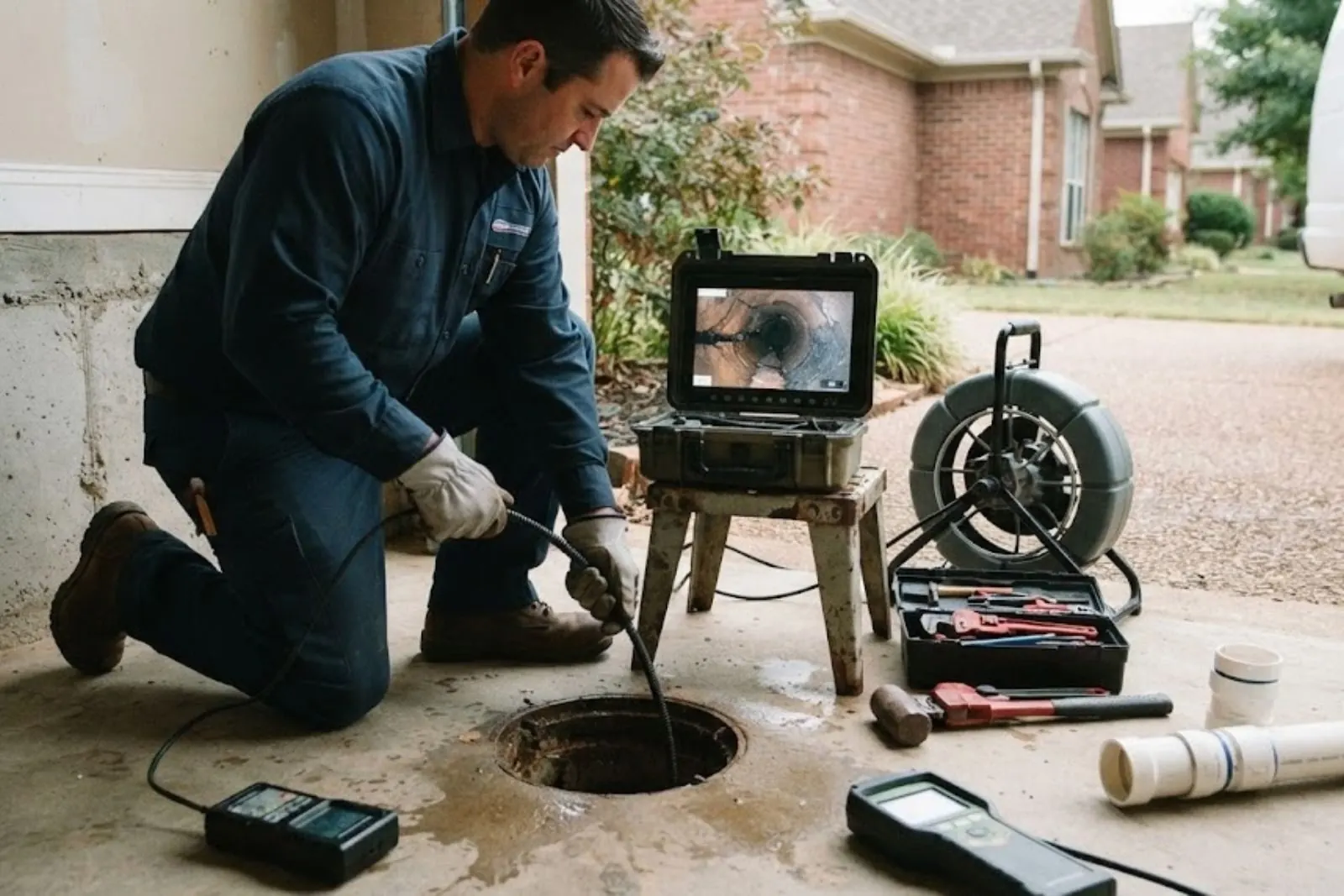
Emergency Sewer Line Repair in Hanover Park, IL
Repeated backups, a sinkhole in the yard, or a camera showing broken pipe? Call us. We explain your repair options plainly.
Sewage in the House? Act First, Then Call
A broken sewer line can send waste into the basement or soak the yard. Stop all water use at once. That includes toilets, the washer and showers, since every gallon goes into the damaged pipe.
- Stop using water inside the house.
- Keep family and pets away from wet or flooded areas.
- Turn off the furnace and water heater if sewage has reached them.
- Call us and describe what you see, including any yard depressions.
We answer around the clock. A collapsed line cannot be cleared by cable, so we send a plumber to confirm the cause and make the house safe. After that, we walk through the repair choices.
Signs Your Sewer Pipe Is Broken
Not every backup means broken pipe. These signs together, or a camera view, tell us more.
- Backups return soon after cleaning, in the same fixtures.
- A wet or sunken patch of lawn over the sewer path.
- Sewer smell in the yard or basement.
- Cable stops at the same distance each time.
- Cracks in the slab or floor drain gurgling after rain.
- Rodents or insects coming from a drain.
A sewer camera settles it. It shows whether the pipe is cracked, offset, root-filled, bellied or gone. Our sewer inspection service records the footage so you can see the problem yourself.
Why Sewer Pipes Fail in Hanover Park Houses
Many homes in Greenbrook, Woodlake Trails and Olde Salem were built in the 1960s and early 1970s. The pipe that runs from those houses to the street is often clay tile or cast iron. Both materials are more than 50 years old now, and both have well-known failure patterns.
Clay tile
Clay pipe comes in short lengths with joints every few feet. Seals at those joints degrade, roots enter, and ground movement pushes sections out of line. A joint offset by an inch or two catches paper every time.
Cast iron
Cast iron corrodes from within. Scale builds up, the wall thins, and the bottom of the pipe can rot through while the top looks fine. For you, that means a line that still flows may already be lost along the invert.
Other causes
Heavy equipment over a shallow line, tree growth, freeze and thaw, and settlement can all break a pipe. Hanover Park winters add frost heave to the list. Poor original bedding also leaves bellies where water pools.
| Method | Best suited to | Limits |
|---|---|---|
| Spot repair by excavation | One short broken or offset section | Needs a dig, and the rest of the pipe stays old |
| Full replacement by open trench | Pipe badly broken along its length, or sagging | Yard and surface restoration, deeper excavation |
| Pipe bursting | Pipe that cannot be lined and needs a new diameter | Needs entry and exit pits and checks for nearby utilities |
| Cured-in-place lining | Cracks and root entry in pipe that is still round | Not allowed by the village on defective pipe, needs descaling and camera first |
Call and tell us what the footage showed. We will talk through repair or replacement.
How a Sewer Repair Job Goes
Camera and locate
We record the pipe, mark depth and distance with a locator, and decide where the damage starts and ends.
Call JULIE
Illinois law requires a JULIE dig number before excavation. We request it so gas, electric and water lines are marked.
Permit and notice
Plumbing contractors must be registered with the village, and permits are not issued until they are. The village needs 24 hours notice for inspection, and work in the right of way is approved by Engineering.
Dig, cut and replace
We cut out the damaged pipe and install new six-inch pipe, bedded and sloped. We use solid wall PVC, since cellular-core PVC is not allowed.
Inspect and backfill
The inspector reviews the work before we cover it. Then we compact the soil and restore the surface as agreed.
What Hanover Park Requires for Sewer Work
The village sanitary sewer repair rules set clear minimums. The building sewer must be at least 48 inches deep, and pipe within six feet of the building must be six-inch. A cleanout comes up to grade about five feet out.
Work within five feet of the building must be done by a licensed plumber. The rules also bar cellular-core PVC. In practice, a repair that ignores them can fail inspection and get dug up a second time.
Lining versus digging
Lining can avoid a trench. The village allows it only when the pipe is descaled first and a recorded camera inspection supports it, and it is not allowed on defective pipe. If the camera shows a collapsed or badly offset section, digging is likely.
Flood-prone areas
Hazard planning for the village names the Highlands subdivision, Schick Road, Anne Fox School Creek, and the Barrington and Irving Park Road area as flood-prone. In these areas, a backup after heavy rain can come from stormwater entering the sewer. Fixing joints helps, and a backwater valve is worth discussing with us.
Verify any plumber you hire
Illinois licenses plumbers through IDPH. The 058 license is the plumber license, and 055 is the contractor registration. IDPH has an online lookup, and the village requires registration before it issues permits.
What Affects the Cost of Sewer Line Repair
A sewer repair is priced after a camera inspection, since depth and length decide most of the work. These are the factors that matter most.
Depth and length of the damage
A short section near the cleanout is a small job. A long run at the village minimum depth or deeper takes more digging.
Repair method
Spot repair, trench replacement, bursting and lining each use different equipment, crew time and materials.
Surface above the pipe
Lawn is cheaper to restore than a driveway, a patio or a tree-lined bed.
Permits and inspections
Village permits, JULIE locates, and inspection scheduling all take time and are part of the job.
Pipe condition elsewhere
If the rest of the line is poor, replacing more now avoids a second dig later.
Insurance often does not cover wear and tear or root damage. Ask your insurer whether any sewer backup endorsement applies, and keep the camera footage.
Call us for a written scope and plan. We explain each option before work begins.
Cleaning, Repair or Replacement
Some lines need only cleaning. If the camera shows a sound pipe with a grease or paper blockage, our sewer line cleaning work may be all you need. If roots are the whole problem and the pipe is intact, hydro jetting followed by a recheck can delay a dig.
A clay pipe with several offset joints, or a cast iron pipe with a rotted bottom, usually needs replacement. Repairing one joint while the next three fail wastes a dig. We use the footage to show where the damage ends and explain the sensible scope.
If the damaged pipe connects to a basement that floods, review your sump pump setup as well. A sump discharge should never be tied into a failing sanitary line.
Planning for Landscaping and Access
Mark your sprinkler heads, invisible fence wire and any buried lines you know about. Tell us where trees stand, since roots affect the route. Move vehicles from the driveway if it will be cut.
Excavation is messy but short. After backfill, the soil settles, so a patch of lawn may sink slightly for a season. We discuss restoration before we start so nothing surprises you.
Records You Should Ask For
Keep the permit number, the camera footage and the inspection record from any sewer repair. When you sell the house, a buyer's inspector may scan the line, and clear records show what was done.
The village keeps permit files at Inspectional Services, open Monday through Friday from 8 to 4:30 and closed on Wednesdays. For you, asking them for history on your address can show earlier sewer work before you plan a new repair.
Source type: Village of Hanover Park Inspectional Services
Codes and standards that apply
The village sets specific sanitary sewer repair rules: a minimum 48 inch depth, 6 inch pipe within 6 feet of the building, a cleanout to grade about 5 feet out, no cellular-core PVC, and inspection with 24 hours notice. Relining needs descaling and a recorded camera inspection and is not allowed on defective pipe.
Common questions
Yes. If sewage is in the house or the yard has collapsed, stop water use and call now. Keep people away from the affected area.
We answer around the clock, including weekends and holidays. A plumber will confirm the cause, make the house safe and explain the repair options.
A camera is the only reliable answer. A clog clears with cleaning. Broken pipe returns to trouble soon after, and the cable stops at the same point.
Yes, repair or replacement of the building sewer needs a village permit. The plumber must be registered with the village, and the village needs 24 hours notice for inspection.
Possibly. Village rules allow lining only after descaling and a recorded camera inspection, and not on defective pipe. The camera decides.
The village main belongs to the village. Your building sewer is yours. Public Works can tell you where the connection is, and our camera shows which side the damage is on.
Clay joints and cast iron both age. After 50 years, seals open, roots enter, and the iron rots. It is a common pattern, not a sign of poor maintenance.
We request the dig number as part of the job. If you plan landscaping or fencing, you should call JULIE yourself before any digging of your own.
Sewer problem? Call us now.
We answer around the clock and will explain repair or replacement in plain terms.