
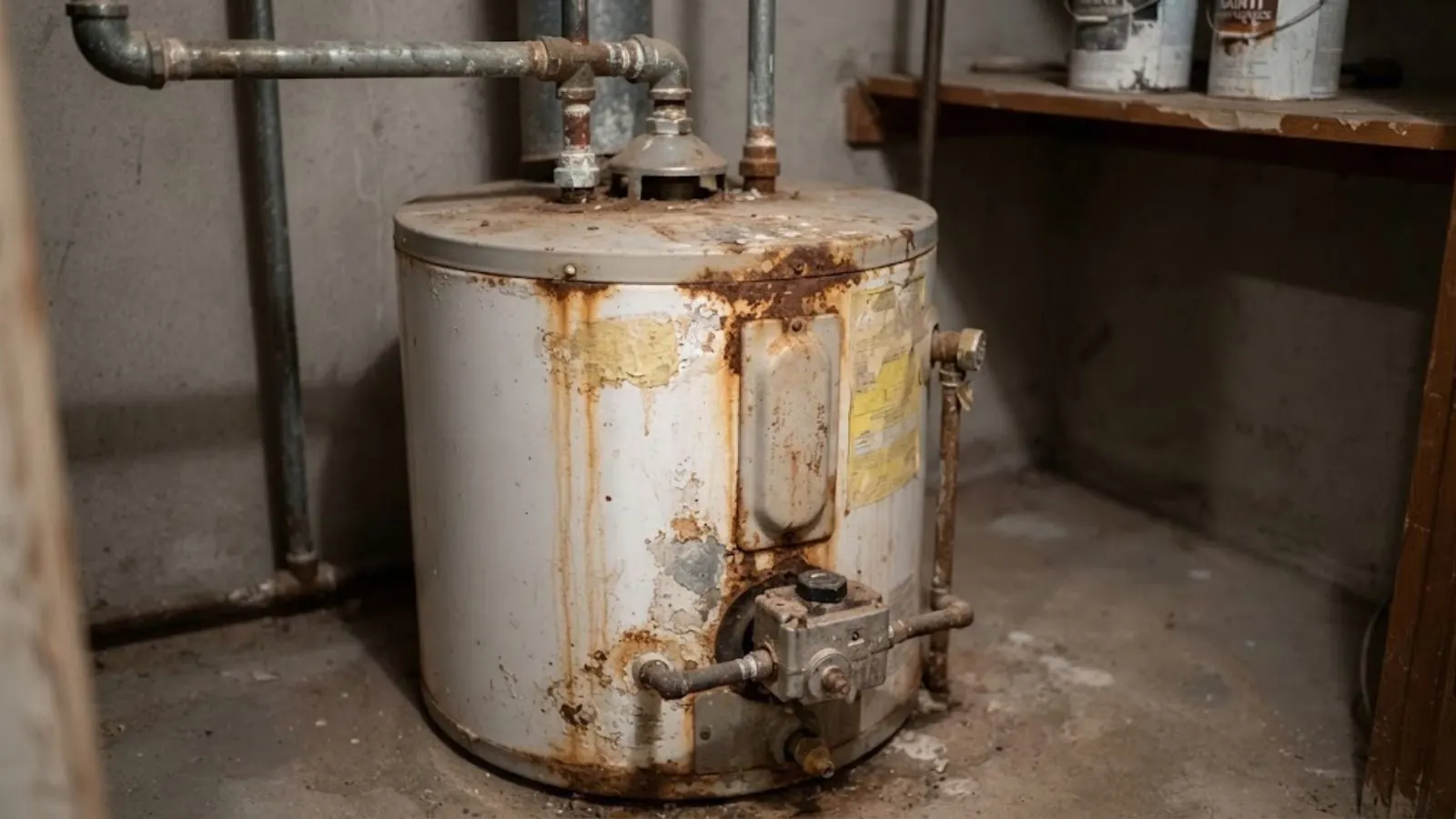
Emergency Water Heater Replacement in Hanover Park, IL
A tank that is flooding or past repair needs a clean swap, not a patch. We replace gas and electric water heaters and handle the village permit.
If your tank is leaking, do this first
A water heater that has failed through the shell can release dozens of gallons onto your floor. Slowing that water down is the first job, and it takes less than a minute if you know where the valves are.
Shut the cold supply
Turn the cold water shutoff valve on the pipe above the heater clockwise until it stops. If the valve is stuck, close the main water valve at the meter or where the line enters the house.
Cut power or gas
Flip the heater's breaker off on an electric unit. On a gas unit, turn the control to OFF. A tank running dry with the burner or elements on can damage parts and create hazards.
Drain to a safe spot
Attach a hose to the drain valve at the bottom and run it to a floor drain or outside. Open a hot tap upstairs to let air in. Only do this once the water has cooled.
Call for replacement
Tell us the tank size on the label, the fuel type, and where the heater sits. We plan the right unit before we arrive.
Gas smell means leave first
If you notice a gas odor near the heater, go outside, call the gas utility, and then call us. Do not use switches, lighters, or phones inside until it is cleared.
How we decide the replacement is the right call
Not every failing heater needs to be replaced. We check the tank for shell leaks, test the controls, and look at the age printed on the data plate. The first four digits of the serial number on many brands encode the month and year of manufacture, which helps us judge how much life is left.
A tank that leaks from the shell, rusts at the seams, or has failed its relief valve more than once is near the end. A heater older than about a decade that needs a gas valve or multiple parts is also a candidate. If a single part has failed on a younger unit, our water heater repair service is the better route.
Choosing the right new water heater
Replacement is a chance to match the heater to how your household actually uses hot water. A tank that was fine for a young couple may be too small for a family of five with teenagers. Sizing starts with the first-hour rating, not just the gallon number on the front.
| Type | Best fit | Things to know |
|---|---|---|
| Standard gas tank | Homes with an existing gas line and flue | Lowest upfront work when swapping like for like, needs proper venting |
| Standard electric tank | Homes without gas or a usable flue | Simple install, higher running cost in many cases |
| Power-vent or direct-vent gas tank | Rooms with no chimney or a bad flue | Needs electric outlet and PVC venting through a wall |
| Hybrid heat pump tank | Basements with space and air volume | Pulls heat from room air, cools the space, needs clearance and a condensate drain |
| Tankless gas unit | Households wanting endless hot water | Needs larger gas line and new venting, see tankless page |
Call and tell us what heater you have now. We will talk through size, fuel, and what the install will involve.
Hybrid and heat pump water heaters
Hybrid water heaters use a small heat pump on top of the tank to move heat from surrounding air into the water. They use far less electricity than a standard electric tank, and many qualify for utility or federal efficiency incentives. The trade-off is size, noise, and the need for roughly a few hundred cubic feet of air around the unit.
In Hanover Park, an unfinished basement works well because the unit can draw from the larger air volume and the cooler air is not a problem in summer. In winter the unit may pull heat from your furnace area, and it can make that part of the basement feel cooler. It also needs a condensate drain, since it removes moisture from the air as it works.
Venting, gas lines, and code details
Venting is where replacements go wrong. A new heater with higher efficiency may not draft into an old masonry chimney, which has become oversized for the exhaust of newer appliances. We check the chimney liner and the flue size, and we tell you if a liner or a power-vent model is needed.
Other Illinois village permit conditions for water heater swaps are a useful reference for what inspectors look for. They state that the unit must be installed per the manufacturer's directions and Illinois plumbing rules, that relief discharge pipes be rigid approved metal, that flue joints be sealed with three screws each, and that an expansion tank is required on a closed system.
We add or replace the expansion tank where a backflow preventer or pressure-reducing valve makes the system closed. We also fit a new flexible gas connector, a new shutoff, and fresh dielectric or brass fittings rather than reusing corroded ones.
Why old galvanized and copper piping needs a look
Many Hanover Park houses date from the 1960s and 1970s. The piping that feeds the heater may be galvanized steel or older copper with soldered joints. When we disconnect the old tank, we check these unions and nipples. If they are heavily scaled, we replace them so the new unit does not leak at the first connection.
Permits and inspection in Hanover Park
Replacing a water heater generally needs a plumbing permit. In Hanover Park the Inspectional Services Division issues permits, and plumbing contractors must be registered with the village, holding the IDPH 055 contractor registration and 058 plumber licence, plus a Letter of Intent. The village will not issue a permit until the contractor is registered.
Illinois also lets owner-occupants do their own plumbing under a Homeowner Plumbing Affidavit, though they may only hire Illinois-licensed plumbers to assist. If you are weighing a do-it-yourself swap, keep in mind that gas, venting, and relief piping all get inspected. Inspectional Services is closed on Wednesdays, so plan around that.
We pull the permit, schedule the inspection, and haul away the old tank. After a gas install, we confirm there is no leak at the new connections with a combustion and leak check.
What happens on replacement day
- We confirm the tank size, fuel, and venting plan with you before touching anything.
- We shut off water and gas or power, then drain and disconnect the old heater.
- We set the new unit on a level base or pan, with the relief valve piped to a safe termination.
- We connect water, add the expansion tank if needed, and reconnect the gas or electric supply.
- We fill the tank, purge air, light or power the unit, and test the flue draft and temperature.
- We clean up, take the old heater with us, and walk you through the controls.
What affects water heater replacement cost
A swap is not one fixed job. These are the factors that move the total once we have seen your setup.
Heater type and capacity
A standard tank, a power-vent model, a hybrid heat pump unit, and a tankless unit are priced very differently, and larger tanks cost more than smaller ones.
Venting and gas work
A new liner, a power-vent kit, or a larger gas line adds materials and labor beyond the heater itself.
Code upgrades
An expansion tank, a new relief discharge line, a drain pan, or updated shutoffs may be needed to meet current rules.
Permit and inspection
The permit fee and the time to schedule an inspection are part of a compliant job.
Access and haul away
Tight stairs, long runs, or removing a heavy old tank from a basement change the labor involved.
Homeowners insurance generally pays for sudden damage from a tank that bursts, though it usually does not pay to replace a heater that wore out.
Call and we will give you a clear price before anything is ordered.
Getting more years from the new heater
A new tank should last roughly a decade or longer with basic care. The anode rod is the sacrificial part that protects the steel, and checking it every few years is the single best habit. Flushing the tank annually matters in Hanover Park, where Lake Michigan water supplied through the Chicago system is reported as moderately hard.
If you are also considering a different location for the heater, such as moving it out of a cramped closet, see our water heater installation page. If you want endless hot water, our tankless water heater page explains what the conversion involves.
Neighbors in nearby towns ask the same questions, and we serve Streamwood and Bartlett as well.
Codes and standards that apply
A replacement is regulated by the Illinois Plumbing Code (77 Ill. Adm. Code 890), and the village registers plumbing contractors before issuing permits. Ask for the permit and inspection to be part of the job, because the Inspectional Services Division is closed on Wednesdays.
Common questions
Yes. If your tank is leaking, shut the cold supply valve and the gas or power, then call. We answer around the clock.
If you smell gas, leave the home first and call the gas utility, then call us. We plan the replacement unit based on what you tell us about the old one.
Most tank units last roughly 8 to 12 years. Hard water, skipped flushing, and a spent anode rod shorten that. A heater that rumbles, rusts, or leaks at the base is usually near the end.
Generally yes. The Inspectional Services Division issues plumbing permits, and the contractor must be registered with the village first. We handle the permit and the inspection scheduling for you.
Yes, though it changes what the job involves. Electric needs a dedicated circuit and breaker, and a hybrid needs space, a condensate drain, and clearance. We check the electrical panel and the room before recommending it.
Newer, more efficient gas heaters produce cooler exhaust that may not rise well in an old masonry chimney. That can cause poor draft. We check the flue and may recommend a liner or a power-vent model.
On a closed system, where a backflow preventer or pressure-reducing valve blocks water from flowing back to the street, yes. Without it, heated water has nowhere to expand and pressure spikes. That stresses the tank and fittings.
It affects how you maintain it. Reports for the Chicago supply that serves Hanover Park describe moderately hard water, so scale builds on elements and tank bottoms. Annual flushing and anode checks help any type last longer.
Replace it before it floods
Call Hanover Park 24/7 Plumbing. We answer around the clock and plan your new water heater with you.