
Emergency Toilet Repair in Hanover Park, IL
An overflowing or leaking toilet cannot wait. Shut the supply valve, then call and we will sort out the cause.
What to do right now if the toilet is overflowing
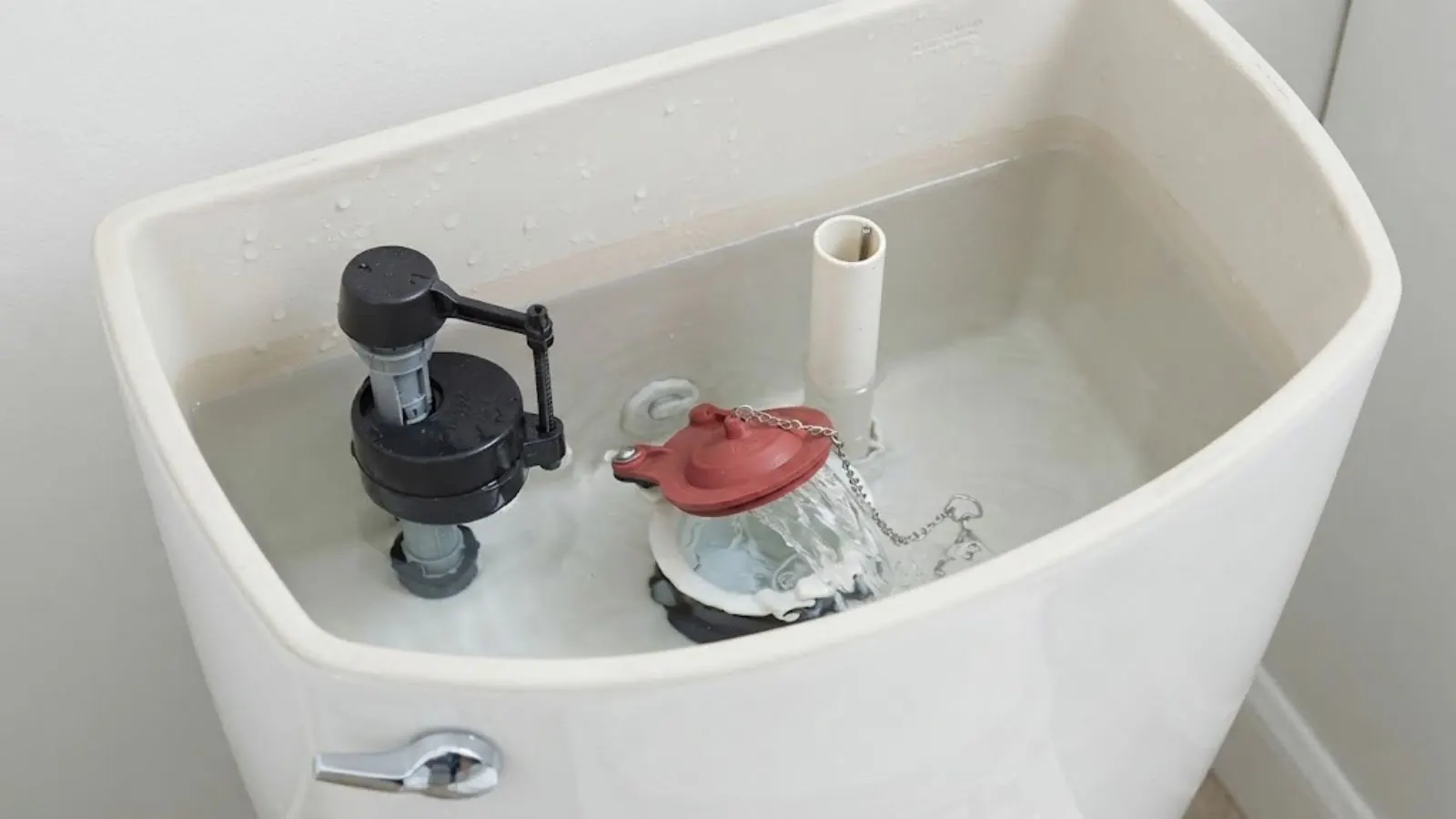
Do not flush again. Lift the tank lid, push the flapper down, and turn the small oval handle on the wall behind the bowl clockwise until it stops. That stops the refill and usually stops the spill.
Lay towels around the base and keep children and pets out of the room. If the water is dark or smells of sewage, the clog may be in the line past the toilet, not in the bowl. In that case a plunger will only push the problem around, and a drain cleaning visit is the right fix.
Shut-off valve will not turn?
Old multi-turn stops in 1960s and 1970s homes often seize or drip when moved. Do not force it. Shut the main water valve instead and call us.
Common toilet problems we repair
Running toilet
Water keeps trickling into the bowl after the flush. A warped flapper, a worn flush valve seat, a chain that is too tight or a fill valve that will not shut off are the usual causes.
Weak or incomplete flush
Mineral crust can block the rim jets and the siphon hole under the rim. A low tank water level or a flapper that closes too early can also cut the flush short.
Leak at the base
Water around the foot of the toilet points to a failed wax ring, a cracked flange or loose closet bolts. The subfloor can rot if it goes unfixed.
Rocking bowl
A toilet that moves when you sit on it has loose bolts or a flange set at the wrong height. Shims alone rarely solve it for long.
Constant clogs
Repeat clogs can mean a partial blockage in the trap, a vent problem or a build-up further down the branch line.
How we find the cause
Check the water level and flush action
We watch a full flush and note where the water stalls, trickles or rushes. That narrows the fault to the tank, the bowl or the drain.
Test the flapper with dye
A few drops of food coloring in the tank show whether the flapper is leaking into the bowl. Color in the bowl without flushing means the seal has failed.
Inspect the base and supply line
We look for wet floor tile, stained caulk, a loose flange and a weeping supply connector. Each one has a different repair.
Repair, then test
We replace the failed part, reseat the bowl if needed, and run several flushes while checking every joint for seepage.
Call now. We handle toilet emergencies at all hours and will tell you what to shut off while we head your way.
Parts we replace most often
| Symptom | Likely part | What the repair involves |
|---|---|---|
| Hissing or constant refill | Fill valve | Swap the valve and reset the float height so it shuts off at the overflow tube mark. |
| Ghost flushes | Flapper or flush valve seat | Replace the flapper, and the seat if it is pitted or scaled. |
| Water on the floor at the base | Wax ring or flange | Pull the bowl, inspect the flange, install a new seal and reset the bowl. |
| Drip at the wall | Supply line or angle stop | Replace the braided line or the stop valve. |
| Weak flush | Rim jets or siphon jet | Clear mineral build-up and check the tank water level. |
Why Hanover Park toilets wear the way they do
Much of Hanover Park was built in the 1960s and 1970s. Toilets from that era may have been replaced once or twice, but the closet flange, the cast iron or galvanized waste stack and the old shut-off valves are often original. That is why a simple wax ring job sometimes turns into a flange repair.
The village draws 100% Lake Michigan water through the Northwest Suburban Municipal Joint Action Water Agency. Reports for the same Chicago supply, such as Streamwood's 2023 report, list about 8 grains per gallon of hardness. Moderately hard water leaves scale on flush valve seats and rim jets, so flappers and fill valves tend to age faster. A toilet that starts running again within a few years is often telling you about scale.
What affects the cost of toilet repair
Toilet work ranges from a ten-minute part swap to pulling the bowl and repairing the floor. These are the factors that set the price.
Which part failed
A flapper or fill valve is a small repair. A cracked tank, a broken flange or a failed bowl is a larger one.
Access and floor condition
A soft or stained subfloor around the base adds repair steps before the toilet can be reset.
Age of the fixture
Parts for older toilets may be hard to match, which can make replacing the toilet the sensible choice.
Supply and shut-off valves
A seized angle stop has to be replaced before most repairs can be done safely.
Drain condition
If a clog sits past the trap, the job becomes a drain cleaning job in addition to the toilet repair.
Insurance coverage for water damage varies by policy, and a slow leak that has rotted a floor is often treated differently from a sudden overflow. Check your policy wording.
Call us and describe what you see. We will explain what the job involves before any work starts.
When to replace instead of repair
If the bowl or tank is cracked, the glaze is crazed, or you are on your third flush valve in a few years, a new toilet usually costs less over time. We can also advise on water-saving models. Larger bathroom work may involve plumbing installation. If the new toilet still gurgles, the vent or the line may need a look through a sewer camera inspection.
Moving a toilet or replacing a closet flange may need a permit. Plumbing work in Hanover Park goes through the village Inspectional Services Division, and the contractor must be registered with the village.
Codes and standards that apply
Toilet and fixture work follows the Illinois Plumbing Code (77 Ill. Adm. Code 890). The Illinois Department of Public Health keeps an online license lookup, so you can check any plumber before work starts.
Common questions
Yes. If a toilet is overflowing or leaking, shut the valve behind the bowl, put down towels and call. We answer around the clock and will talk you through what to shut off while a plumber heads to your Hanover Park address.
The usual cause is a flapper that no longer seals, a chain with the wrong slack or a fill valve that does not shut off. Scale from Lake Michigan water can roughen the valve seat so even a new flapper leaks.
Yes. A moving bowl strains the wax ring, and the seal fails slowly. You may see no water for weeks, then find a damp floor. Tightening bolts evenly can help, but a flange that sits low or is cracked needs repair.
It can. A failed wax ring on an upstairs bathroom lets water run under the floor and through the ceiling. Stained drywall under a bathroom is a reason to stop using that toilet and call us.
If a plunger clears it but it returns within days, the problem may sit past the trap. Roots, scale or old pipe in a 1960s-70s home can narrow the line. We can check the toilet first, then the drain.
Swapping a flapper or fill valve does not. Larger work such as relocating a toilet or repairing waste piping may. The village Inspectional Services Division handles plumbing permits, and registered contractors pull them.
Toilet trouble in Hanover Park?
Call any time. We answer around the clock and can usually tell you the next safe step on the phone.