
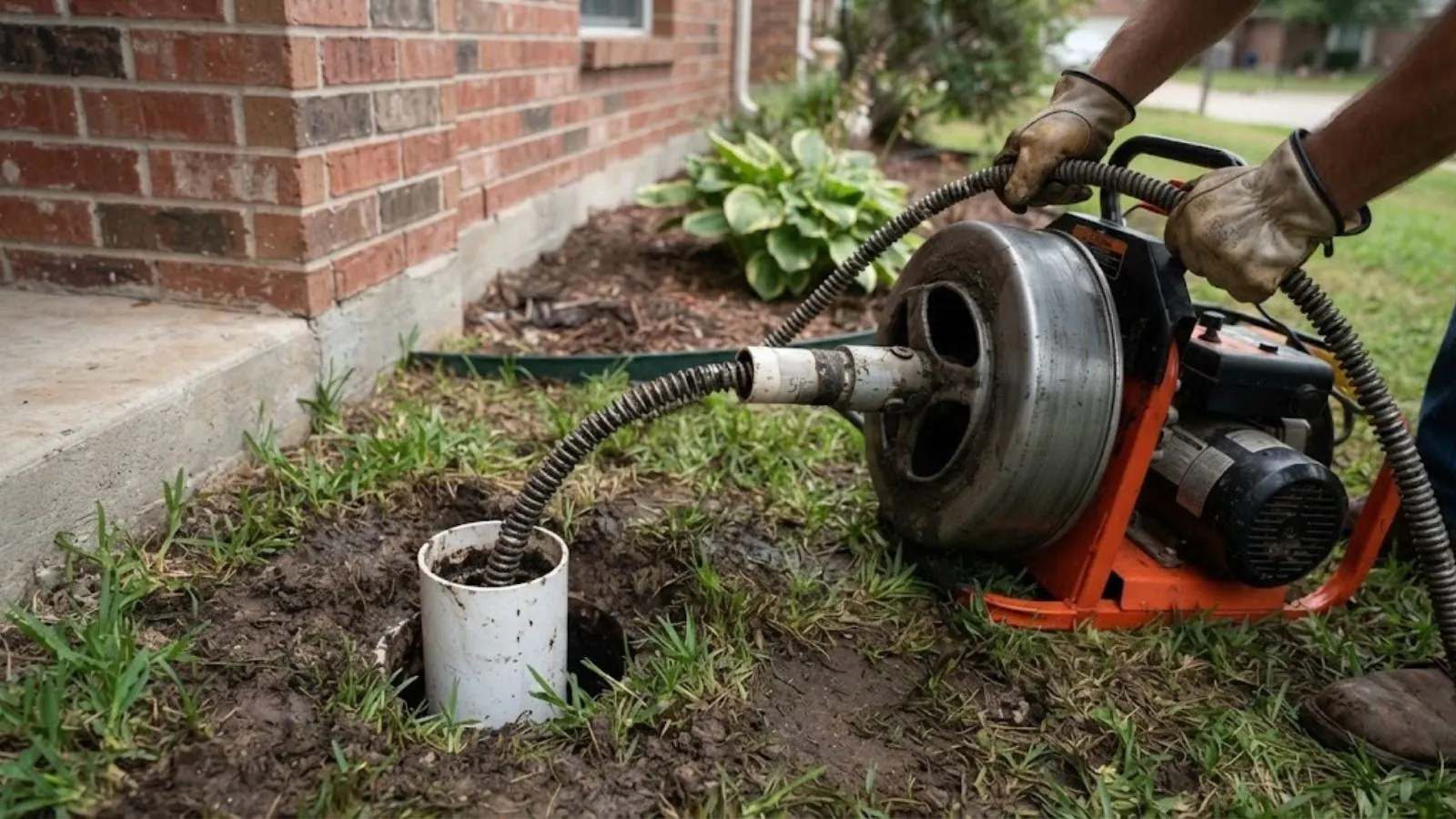
Emergency Drain Cleaning in Hanover Park, IL
Water standing in a tub, a gurgling toilet, or sewage in a floor drain? Call now. We clear the blockage and find out why it formed.
Drain Backing Up Right Now? Start Here
Stop running water first. Every gallon you send down a blocked line has to go somewhere, and that somewhere is often your basement floor. Skip the washing machine, dishwasher and showers until the line is open.
If several fixtures are slow at once, or the basement floor drain is bubbling, the blockage is probably in the main line and not in one trap. Do not pour drain opener into standing water. It sits on the clog, and the next person to open the pipe can get a chemical burn.
- Turn off appliances that drain to the same line, including the washer and dishwasher.
- Keep toilets unflushed if water is rising in the lowest drain in the house.
- Move rugs, boxes and electronics away from basement floor drains.
- Call us, then tell us which fixtures are affected so we bring the right cable and camera.
We answer around the clock, and a main line backup is treated as an emergency whether it is Tuesday noon or Sunday at 3 a.m. For a stubborn grease or root blockage, ask about hydro jetting when we arrive.
Why Drains Clog in Hanover Park Homes
A lot of Hanover Park housing went up in the 1960s and early 1970s, when the Greenbrook subdivision was built and Woodlake Trails and Olde Salem followed. Houses from that period often have cast iron stacks, galvanized branch lines, and cast iron or clay pipe running out to the street.
Cast iron rusts from the inside and grows rough scale. Hair, grease and paper catch on that scale much faster than they do on smooth plastic. For you, that means a line that clogs again and again in the same spot is usually telling you about pipe condition, not bad habits.
Clay sewer pipe comes in short sections joined at the hubs. Over decades, roots find those joints and push in. A blockage that starts as a slow tub can turn into a full main line stoppage when a root mass catches paper. A camera tells us which one you have.
The water itself plays a part. Village supply is Lake Michigan water treated by Chicago, and reports for the same supply list hardness around 8 grains per gallon. Moderately hard water leaves scale on pipe walls and on pop-up stoppers, so narrow galvanized lines tighten over time.
| Where it clogs | Typical cause | Usual method |
|---|---|---|
| Bathroom sink | Hair and soap film in the trap and pop-up | Remove the stopper, clean the trap, light cable |
| Tub or shower | Hair wound around the drain crossbar | Hand removal, small drum machine |
| Kitchen sink | Grease and food solids in the branch line | Cable with a grease cutting head, sometimes a jetter |
| Laundry standpipe | Lint and detergent residue | Cable through the standpipe, inspect the trap |
| Basement floor drain | Debris and silt in the line to the main | Larger cable, camera if it repeats |
| Main sewer line | Roots, paper, a broken or sagging section | Heavy cable or jetting, then camera inspection |
How a Drain Cleaning Visit Works
Find the real problem
We ask which fixtures drain slowly and which are fine. A clog that affects only the kitchen sink is a branch problem. A clog that shows in the lowest drain is a main line problem.
Open access
We pull a cleanout cap if one is available, or remove a trap or toilet when we must. Clean access matters because a cable pushed through a tight trap can scratch it or miss the clog.
Clear the blockage
We choose a cable size and cutting head to match the pipe. A thin cable for a three-quarter inch trap arm is the wrong tool for a four-inch main.
Check the result
We run water and watch the drain, then confirm the line carries flow all the way to the main.
Look deeper if needed
If the clog returns or the cable brings back root or scale, we recommend a sewer camera inspection before it becomes a collapse.
Call now and a plumber will talk you through the next steps while we get on the road.
Fixture by Fixture
Kitchen sink clogs
Kitchen drains carry grease that cools and coats the pipe wall. Each wash adds another layer until only a pinhole of flow remains. A cable breaks through the center, yet leaves grease on the walls, so heavy buildup often calls for jetting instead.
Bathroom sinks, tubs and showers
Hair is the usual culprit. It wraps around the pop-up lever or the crossbar, then traps soap and skin oils. If you pull the stopper and find a gray rope of hair, you have found the cause, but the same slime may also coat the trap beyond reach.
Toilets
A toilet that clogs with normal use may have a partial blockage in the closet bend or the branch line, not in the bowl. When a plunger fails twice, stop and call. Forcing it can push waste back up through the tub drain.
Floor drains and laundry lines
Basement floor drains sit at the lowest point, so they warn you first when the main is blocked. If one gurgles when the washer drains, the main line is already restricted. Our sewer line cleaning service handles the larger pipe beyond the house trap.
Signs the Clog Is Bigger Than One Drain
- Two or more fixtures back up at the same time.
- A toilet bubbles when you run the shower or washer.
- Water appears around the basement floor drain.
- A sewer smell shows up with no visible leak.
- The same drain clogs again within a few weeks of being cleared.
Any of these points to the main line or the stack. Roots, a bellied section that holds water, or collapsed pipe can all cause them, and none of them respond to a bottle of drain cleaner. If the camera shows a broken pipe, we explain your options under sewer line repair.
Why we avoid chemical drain openers
Caustic openers heat up and can soften old PVC joints. They also leave a hazard behind for the next plumber, who may be working with the cap off. A cable or jetter removes the clog without leaving chemicals in your pipes.
What Affects the Cost of Drain Cleaning
The price depends on the line and the blockage, not on a flat rate. After we see the drain, we explain the work and the price before starting. These are the factors that move it.
Which drain it is
A bathroom sink trap is a short job. A main line cleaned from a distant cleanout is a longer one, with heavier equipment.
Access to the pipe
A cleanout in the yard makes the work faster. Pulling a toilet or removing a trap adds labor and may take extra time to reset.
Type of blockage
Hair and paper clear fast. Grease, roots and mineral scale need cutting heads or a jetter and more passes.
Pipe material and condition
Rough cast iron and cracked clay can snag a cutting head and slow the cleaning. Sometimes a camera pass is added to protect the pipe.
Repeat clogs
If the line has been cleared before, we look for the underlying cause with a camera. That adds a step but prevents another backup.
Our dispatcher confirms the scope of the visit when you call, and the plumber confirms it again on site.
Call us and describe the drain. We will explain how the visit works before anyone is on the road.
Keeping Drains Open After We Leave
Small habits protect older pipes. Scrape plates into the trash, not the disposal, and keep cooking oil in a can. Use a hair catcher in every shower and tub, and empty it weekly.
- Flush only toilet paper. Wipes labeled flushable do not break down in a clay or cast iron line.
- Run hot water for a minute after washing greasy dishes.
- Have the main line cleaned or inspected if roots have been found before.
- Keep the cleanout cap accessible, not buried under storage or landscaping.
If you have a basement sump or a floor drain that backs up in heavy rain, the problem may be groundwater and not a clog. That is a different repair, covered under sump pump repair.
Local Rules That Touch Drain Work
Clearing a clogged drain with a cable is routine maintenance. Replacing pipe is different. The village requires plumbing contractors to be registered, and permits are not issued until a contractor is registered with Inspectional Services.
Illinois licenses plumbers through the state health department under the Illinois Plumbing Code, and IDPH offers an online license lookup. For you, that means you can verify any plumber before they open a wall or dig up your lateral.
Inspectional Services is open Monday through Friday from 8 to 4:30 and is closed on Wednesdays. If your job needs a permit, plan the call around that schedule.
Source type: Village of Hanover Park Inspectional Services and the Illinois Department of Public Health
Safety before you start
Never mix drain cleaners, and never pour one into standing water that may contain another chemical. Open a window, wear gloves and eye protection, and keep children and pets away. If a product splashes on skin or eyes, rinse with water and call Poison Control at 1-800-222-1222. If sewage is backing up, stop using water and call us.
Codes and standards that apply
Drain work in Illinois falls under the Illinois Plumbing Code (77 Ill. Adm. Code 890), and only licensed plumbers may repair or alter drain piping. The Illinois Department of Public Health keeps an online license lookup, so you can check any plumber before work starts.
Common questions
Yes. If sewage is backing into a tub or floor drain, call now. Stop using water and keep people away from the affected area.
We answer around the clock, including weekends and holidays. Tell us which fixtures are affected and whether water is still rising.
Washer water enters the main line and pushes air past the floor drain trap. That sound means the line is partly blocked. It can be roots, grease, or a broken section of old cast iron or clay pipe.
We advise against it. These products can damage old joints and leave a chemical hazard for whoever opens the pipe next. A plunger or a hand-turned auger is the safer first try.
If only your house is backing up and the neighbors are fine, the problem is usually in your building sewer. The building sewer is your responsibility up to the connection. A camera shows where the blockage sits.
Original cast iron stacks and clay laterals have rough walls and offset joints. Waste and roots catch there. A camera inspection shows whether cleaning will hold or whether a section needs replacement.
Clearing a blockage generally does not, but replacing or relocating pipe does. Contractors must be registered with the village before permits are issued. We can tell you which category your job falls into.
Stop using water, clear a path to the cleanout or floor drain, and move belongings off the basement floor. Note when the problem started so we can narrow it down.
Drain not moving? Call us now.
We answer around the clock and can start by phone. Tell us what is backing up.