
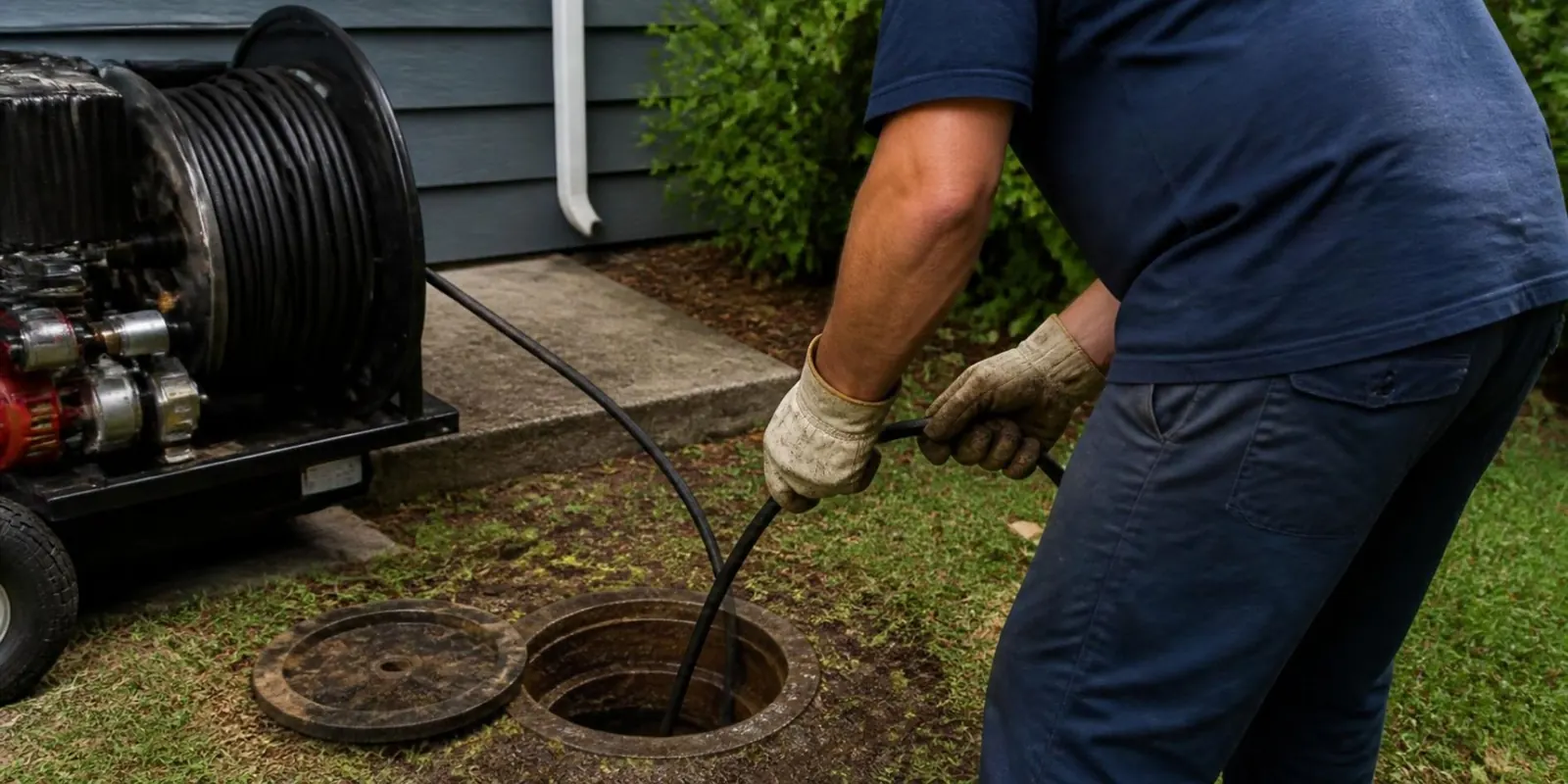
Emergency Sewer Line Cleaning in Hanover Park, IL
Sewage in the basement floor drain means your main line has stopped. Call us. We clear it and show you what caused it.
Sewage Backing Up? Do This Now
Stop using water at once. A running faucet or flush adds to what is already coming up. Keep children and pets out of the area, because sewage carries bacteria.
- Do not run the washer, dishwasher or showers.
- Do not mix or pour chemicals into the drain.
- Lift valuables and boxes off the basement floor.
- Open a window if the smell is strong, but do not touch standing water.
Call us and say how many drains are affected. We answer around the clock, and a main line backup is treated as an emergency. If you smell gas rather than sewage, leave the house and call the gas company.
What Sewer Line Cleaning Is
Your building sewer is the pipe that runs from the house to the village main. It is typically four to six inches across and carries everything the house drains. Cleaning means we run a heavy cable or jetter through it and remove what is blocking it.
Most main line stoppages come from tree roots, grease, paper, wipes, or a broken section that traps debris. We can usually tell the cause from the cable and from what comes out. A camera then confirms it.
Why Older Hanover Park Sewers Clog
The bulk of local homes were built in the 1960s and early 1970s. Building sewers from that era are often clay tile or cast iron. Clay comes in short sections with joints every few feet, and each joint is a place for roots to enter.
Cast iron rusts and sheds scale. Over decades, the bore narrows and a rough surface grabs paper. For a homeowner, this explains why a house may need its main cleaned more often than a newer neighbor.
Hanover Park has more than 200 miles of storm and sanitary sewers. Your building sewer connects to the village main at the property line. The village is responsible for the main, and you are responsible for your own line, so a camera helps decide which side has the problem.
| Cause | What it looks like | Response |
|---|---|---|
| Tree roots | Slow drains that worsen over months, roots on the cable | Root cutter or jetter, then camera and recheck schedule |
| Grease and scale | Repeated clogs in the same spot | Jetting to scour the wall |
| Wipes and paper | Sudden stoppage after heavy use | Cable retrieval, review of flushing habits |
| Bellied pipe | Standing water in the camera view | Cleaning now, repair later |
| Broken or collapsed pipe | Cable stops at the same point every time | Camera, then repair options |
Call now. We will ask a few questions and get a plumber with a cable machine on the way.
How We Clean a Main Sewer Line
Locate the cleanout
We look for a cleanout in the yard, basement or crawl area. Village repair rules call for a cleanout at grade, so newer repairs usually have one.
Set up and protect the area
We lay down protection, cap off nearby drains if needed, and make sure no sewage can reach finished spaces.
Cable the line
A drum or sectional machine with a cutting head clears the stoppage. For roots we use a bladed head, and for grease a chain or spinning head.
Flush and test
We run water and watch it move. A line that drains fast and holds is a good sign.
Camera the pipe when it makes sense
A recorded look shows whether the cleaning worked and what the pipe needs, as covered in sewer inspection.
Cable or Jet, and Which Is Right
A cable cuts through the stoppage and gets service back quickly. Jetting washes the wall and reduces the chance of a repeat. For a line that backs up often, our hydro jetting work is the better long-term fix.
If the camera shows damage, cleaning is only a stopgap. A root-filled joint will keep admitting roots until the joint is replaced or lined. Village rules state relining requires descaling and a recorded camera inspection and is not allowed on defective pipe.
Flood-prone parts of town
Village hazard planning lists the Highlands subdivision, Schick Road, Anne Fox School Creek and the Barrington and Irving Park Road area as flood-prone. If you live nearby, a backup during heavy rain may be caused by stormwater entering the sewer, not a clog. Tell us if it only happens in storms.
What Affects the Cost of Sewer Line Cleaning
The price depends on the blockage and the access, so we explain it after seeing the cleanout and hearing the symptoms. These are the main factors.
Cleanout access
A clean, reachable cleanout speeds the job. If none exists, we may have to work through a toilet or roof vent.
What is blocking the line
Paper is quick. Root masses and grease need heavier heads and several passes.
Length and size of the line
A longer run to the main takes longer to clear and to flush.
Pipe condition
Offset joints and cracked pipe make cleaning slower and riskier.
Camera work
Recording the pipe before and after adds time, but it documents the line.
We confirm the scope when you call and again on site, before work begins.
Call us with the symptoms. We will explain the process so you know what to expect.
If the camera shows a broken or collapsed section, our sewer line repair page explains how replacement and lining work in the village.
Codes and standards that apply
Cleaning a building sewer is separate from repairing one. Under the village rules for sanitary sewer repair, any repair work needs a recorded inspection, a JULIE dig number (800-892-0123) and a licensed plumber when it is within 5 feet of the building.
Common questions
Yes. If sewage is backing up, stop water use and call right away. Keep people and pets out of the area.
We answer around the clock, including weekends and holidays, and treat a main line backup as an emergency.
There is no single schedule. A line with no history may never need it. A line with roots or grease may need attention at intervals that a camera can help set.
Your building sewer is yours up to the connection with the village main. If the camera shows a clear line to the property line, the village Public Works office can check the main.
Cutting removes roots but not their source. They can grow back through any open joint. Relining or replacing the pipe is the lasting fix.
Rental machines exist, but a heavy cable can jam in old clay or cast iron and cause damage. Homeowners may do their own work with a Homeowner Plumbing Affidavit, but the village requires a licensed plumber for work within five feet of the building.
Heavy rain can overload the system or force water into cracked lines. Flood-prone areas include the Highlands subdivision and Schick Road. A camera and smoke test can show how water is getting in.
Sewer backed up? Call now.
We answer around the clock and will send a plumber with a cable machine.