
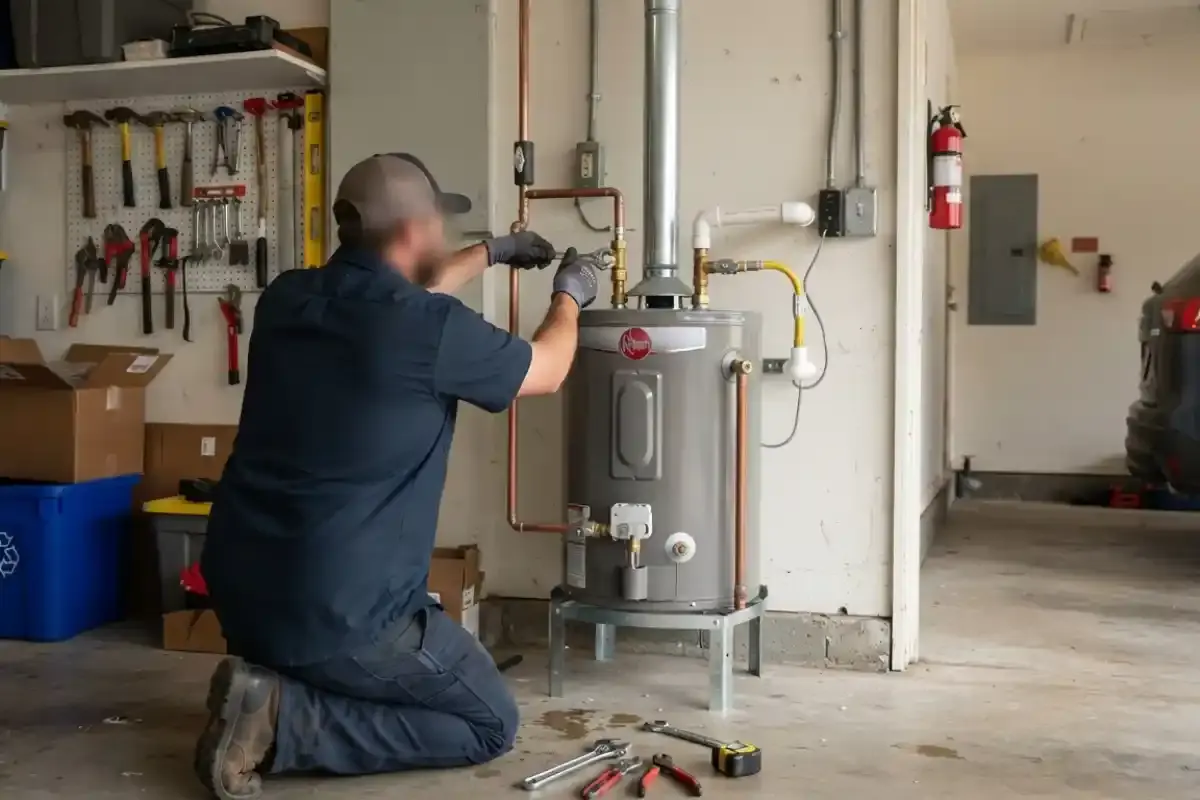
Water Heater Installation in Hanover Park, IL
Adding a water heater in a new spot, finishing a basement, or hooking up a first unit takes planning. We handle the piping, venting, and permit.
When a new installation differs from a swap
A replacement drops a new heater where an old one stood. A fresh installation means the water lines, gas, venting, drain, and power may all need to reach a new location. That is more design work, and it is where code questions come up first.
Common reasons for a new install include a basement finishing project, moving the heater out of a bedroom closet, converting from gas to electric, or adding a second unit for a large household or a lower-level suite. If you only need a like-for-like swap, our water heater replacement page is the better fit.
What we plan before we set the unit
Location and clearance
The heater needs working space in front, room above for the anode rod, and air for combustion if it is gas. A cramped closet may call for a sealed-combustion model.
Water supply and shutoffs
We run or tap cold and hot lines with a shutoff valve on the cold feed. Older galvanized pipe nearby is often replaced at the connection so a new unit is not paired with failing pipe.
Gas or electric supply
Gas units need a properly sized line, a sediment trap, and a shutoff. Electric units need a dedicated circuit rated for the heater's load, installed by a licensed electrician where required.
Venting path
Atmospheric gas heaters need a pitched flue to a chimney or vent. Power-vent and direct-vent units use PVC through a wall, which gives more freedom on location.
Drainage and relief piping
The relief valve discharge needs a rigid line ending at a safe point. A pan with a drain is wise whenever the heater sits above finished space.
Choosing venting for the new location
Venting decides where a gas heater can go. An atmospheric unit needs a route to a chimney, which limits the options in a finished basement. Power-vent and direct-vent models use fans and PVC, so they can exit through a rim joist or wall.
| Venting type | Where it works | What it needs |
|---|---|---|
| Atmospheric (natural draft) | Rooms near a lined chimney | Pitched metal flue, sealed joints, combustion air |
| Power vent | Basements and closets away from a chimney | Electric outlet, PVC vent to the outside, condensate care |
| Direct vent | Tight rooms and finished spaces | Two pipes, one for intake and one for exhaust, through a wall |
| Electric (no vent) | Anywhere with power and water | Dedicated circuit, no flue, more floor flexibility |
Call and describe the space. We will tell you what the install will need before work is scheduled.
Hanover Park housing and what it means for installs
Most Hanover Park homes were built in the 1960s and 1970s, including the Greenbrook subdivision, Woodlake Trails, and Olde Salem. Many have slab or crawl-space ranch layouts and basements with low joists. That affects where a tank and its vent can fit, and it is why we measure the room before recommending a model.
Older homes also tend to have a single chimney serving both the furnace and the water heater. If the furnace has been upgraded to a high-efficiency model, the chimney may now serve only the heater and be oversized for it. That can cause poor draft, so we check the chimney liner during any new install.
Permits, licensing, and inspection
A new water heater installation needs a plumbing permit in Hanover Park. The village Inspectional Services Division handles it, and the contractor must be registered with the village before a permit is issued. Illinois plumbing work is governed by 77 Ill. Adm. Code 890, and IDPH licenses plumbers, which you can check on its online verification tool.
Illinois allows owner-occupants to do their own plumbing under a Homeowner Plumbing Affidavit, but gas piping and venting are the parts most often failed at inspection. We install to code, schedule the inspection, and fix anything the inspector notes.
- We visit or review photos of the space and agree the heater type and location.
- We pull the permit through Inspectional Services, which is closed on Wednesdays.
- We run water, gas or electric, vent, and drain lines, then set and connect the heater.
- We fill, purge, fire the unit, and test the flue draft and relief valve.
- We meet the inspector, or schedule the inspection, and finish any corrections.
What affects water heater installation cost
A new location changes the scope. These are the main variables once we have seen the space.
Distance from existing lines
Longer runs of water, gas, or vent pipe add materials and labor.
Heater type
Tank, power-vent, hybrid, and tankless units cost differently and have different installation needs.
Venting and chimney work
A new liner, wall penetration, or PVC vent run adds to the job.
Electrical or gas upgrades
A new circuit or a larger gas line may be required to support the unit.
Permit and finishing
Permit fees, drain pans, and any drywall or framing around the unit are part of the total.
Call us and we will price your installation after we understand the layout.
Related work often done at the same time
A new installation is a good time to deal with aging shutoffs and pipes nearby. If supply piping is failing, our repiping service can replace it while walls are open. If you plan to finish a basement or add a bath, plumbing installation covers the other fixtures and lines.
Codes and standards that apply
Installations follow the Illinois Plumbing Code (77 Ill. Adm. Code 890). In Hanover Park the contractor must be registered with the village before a permit is issued, and the license year runs February 1 to January 31.
Common questions
Yes, in general. The Inspectional Services Division issues the permit and requires the plumbing contractor to be registered with the village. We handle the paperwork and the inspection.
Usually, yes. The new spot needs water lines, a vent path or power for a power-vent model, and a safe relief drain. We look at joist height, gas line access, and clearance before agreeing on a location.
A power-vent or direct-vent gas model, or an electric unit. Power-vent units exhaust through PVC out a wall, so no chimney is needed. Electric units need no vent at all.
A pan catches slow leaks and relief valve drips before they damage flooring or finished walls. In a finished basement, a pan with a drain line is worth the small added cost.
Illinois allows owner-occupants to do their own work with a Homeowner Plumbing Affidavit. Gas and venting are inspected closely, though, and a mistake there can be dangerous. Many owners hire a licensed plumber for those parts.
Sometimes. A larger or high-output heater may need a bigger gas line than the old one. We calculate the load of your appliances before choosing the pipe size.
Plan your new water heater
Call Hanover Park 24/7 Plumbing. We will talk through location, venting, and permits.