
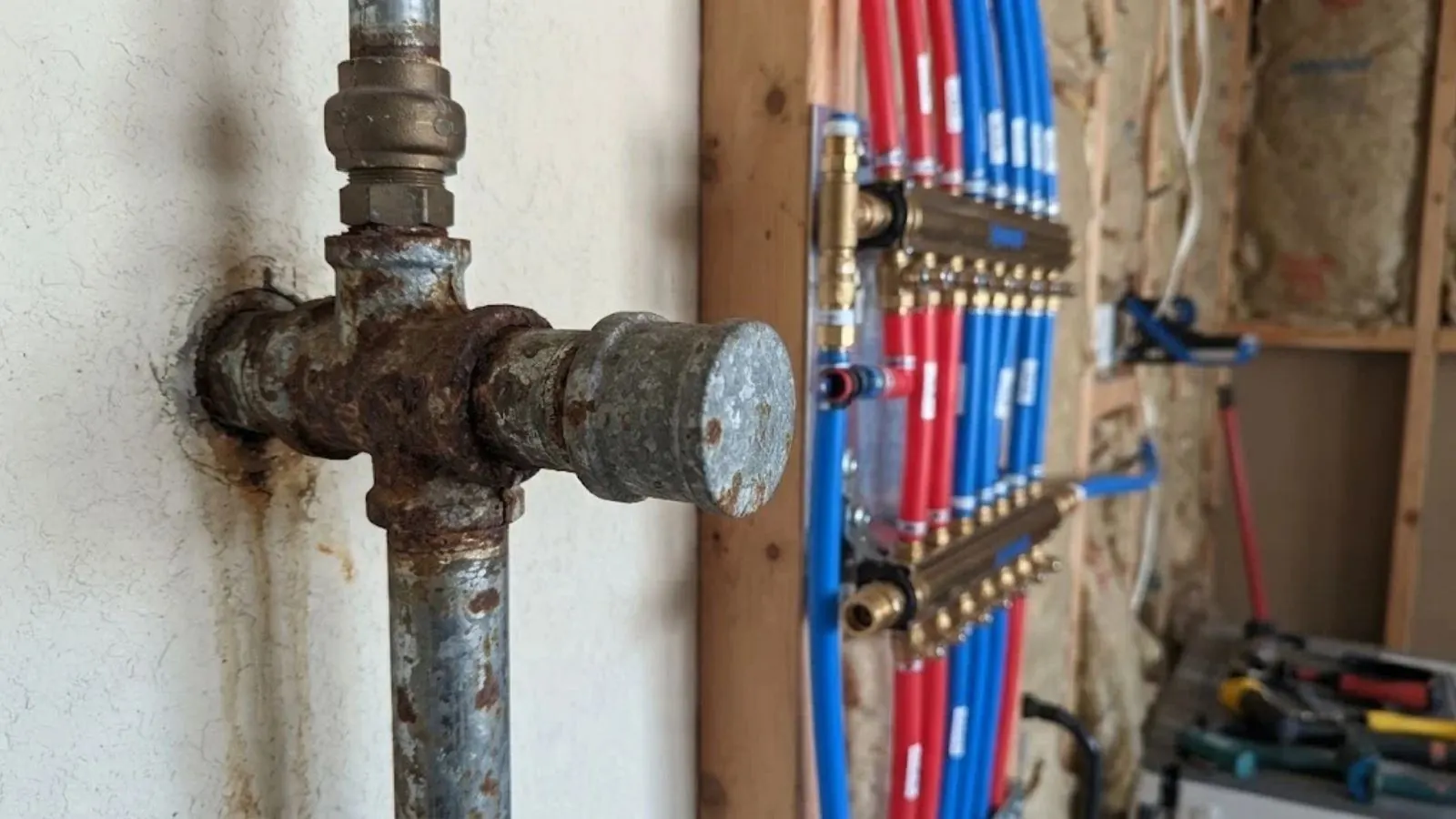
Repiping in Hanover Park, IL
Rusty water, weak pressure and repeat leaks usually mean the pipes are at the end of their life. Repiping replaces them so you stop paying for patches.
When repiping makes sense
Repiping means replacing the supply lines that carry water to your faucets, appliances and water heater. It is not a drain job. Plumbers usually recommend it when repairs start to repeat, or when the pipe itself is the problem and not one bad joint.
- Brown or yellow water, especially after the tap sat unused
- Pressure that has faded over the years
- A second or third pinhole leak in the same year
- Visible green corrosion on copper or flaking rust on steel
- Galvanized pipe in a home built in the 1960s or 1970s
- Water that tastes metallic
One pinhole in a copper line is a repair. Several pinholes in different rooms suggest the whole run has thinned. Our leak detection service can find how many sections are failing before you decide.
Pipe materials we install
| Feature | Copper | PEX |
|---|---|---|
| Material | Rigid metal pipe, soldered joints | Flexible cross-linked polyethylene tubing |
| Freeze tolerance | Splits when frozen | Expands somewhat but can still fail |
| Corrosion | Can pit in aggressive water | Does not corrode or scale |
| Installation | More cutting and joining, more disruption | Long runs bend around corners, fewer fittings |
| Heat and sunlight | Handles both | Not for sunlight exposure, check hot-line fittings |
| Longevity | Often decades in good conditions | Generally long, depends on fittings and water |
Both are accepted in Illinois when installed under the state code. We talk through which one fits your layout, budget and water. Many homeowners pick PEX for its flexibility in finished walls and copper for exposed runs they want to see.
Call and we will look at what is in your walls, explain the options, and give you a clear plan.
How a repipe goes
Walk the house
We check the water line entry, meter, water heater and every fixture, and mark where new lines will run.
Plan access
We choose where to open drywall, typically in closets, behind fixtures and in basement or crawl space ceilings.
Shut down and replace
We close the water, remove old supply pipe and run new lines to every fixture. Most homes are without water for part of the day, not for days.
Test under pressure
New lines are pressurized and inspected for leaks before any wall is closed.
Inspection and patching
The village inspects the work. After that, we close the openings, and drywall finishing is up to you or a handyman.
Homes with a basement and unfinished ceilings often go faster, since the lines are visible. Finished slabs or tight two-story layouts take more planning. We tell you the access plan before we start.
Repiping in older Hanover Park homes
Much of Hanover Park was built in the 1960s boom. Greenbrook went up first, then Woodlake Trails and Olde Salem in the early 1970s. Homes from those years commonly have galvanized steel or early copper plumbing. Galvanized pipe rusts inside, narrows over time and can restrict flow to a fraction of its original size.
The village uses 100% Lake Michigan water supplied by the Northwest Suburban Municipal Joint Action Water Agency. Reports for the same Chicago supply describe moderately hard water, around 8 grains per gallon. Hard water leaves mineral deposits in older pipe and in fixtures, so repiping is a good time to consider a water softener too.
Lead and the service line
Repiping usually stops at the meter, but the line from the street matters. Illinois requires suppliers to inventory lead service lines, and the village keeps a service line inventory dashboard on its water quality page. If your line is lead, the law says a repair means replacing the entire line, so plan that along with the interior work.
A new service line is a separate project, covered in water line repair. Doing both together can reduce disruption and tear-up.
What affects the cost of repiping
No two houses are the same. These factors drive the scope.
Size of the house
More bathrooms, kitchens and fixtures mean more pipe and more connections.
Material choice
Copper and PEX differ in material, labor and fittings.
Access
Open basement ceilings are straightforward. Finished walls, slabs and tight chases take longer to reach.
Drywall and finish work
Cutting access holes is part of the job, and patching and painting may be separate.
Permits and inspection
Whole-house work needs a village permit and an inspection from Inspectional Services.
Repiping to replace worn pipe is generally a maintenance cost and not an insured loss, though damage from a sudden burst may be covered. Ask your carrier before you decide.
Call and we will look at the layout, explain the factors, and put the scope in writing before work starts.
Permits and licensed work for repiping
Plumbing work in the village goes through the Inspectional Services Division at 2121 Lake Street. Contractors need village registration, which requires IDPH 055 contractor registration and a 058 plumber licence, and the permit is not issued until that is in place. The Illinois Plumbing Code is 77 Ill. Adm. Code 890.
Owner-occupants may use a Homeowner Plumbing Affidavit to do their own work, and then may only hire Illinois-licensed plumbers to assist. For a whole-house repipe, most owners bring in a licensed contractor because the job is long and the inspections are strict.
Source type: Hanover Park Inspectional Services and Illinois IDPH
Codes and standards that apply
Repiping is permitted work under the Illinois Plumbing Code (77 Ill. Adm. Code 890). The village will not issue a permit until the plumbing contractor is registered, so confirm registration before you sign.
Common questions
Repeat leaks, brown water, falling pressure and galvanized pipe in a 1960s or 1970s house are the usual signs. A plumber can check pipe condition and flow before you commit.
Both work. PEX is flexible and does not corrode or scale, so it suits finished walls. Copper is rigid and long-lived, so people choose it for exposed runs. We explain the trade-offs for your layout.
Most homes are without water for part of each work day, and we restore service at the end of the day where possible. Larger or two-story homes take more days. We explain the plan before we start.
Usually in a few places. We choose access points in closets, behind fixtures and from basement ceilings to keep the damage small. Patching drywall is typically separate work.
Yes. Hanover Park issues plumbing permits through Inspectional Services, and the contractor must be registered with the village. An inspection checks the work before walls are closed.
Yes. If one branch, like a bathroom or kitchen, is corroded and the rest is sound, we can replace that run. Mixing old galvanized and new copper needs proper dielectric fittings to avoid corrosion.
If corroded galvanized lines are the cause, yes. If the problem is the water service line, a pressure regulator or a clogged fixture, repiping inside will not solve it, so we test before recommending it.
Replace the pipes before they fail
Call our Hanover Park plumbers to schedule a visit and talk through your repiping options.