
Basement Waterproofing in Hanover Park, IL
Damp walls and floor seepage have a cause. We trace where the water enters and fix the path.
Where basement water comes from
Water gets into a basement in a few ways. Rain soaks the soil and pushes against the wall. The water table rises and presses up through the floor slab. Surface water runs toward the house and enters at cracks, window wells or the cove joint where the floor meets the wall.
Each route needs a different fix. Sealing a wall that leaks because of groundwater pressure from below does not work. Knowing which one you have is the first job.
Signs your basement needs attention
- White powder (efflorescence) on block or concrete walls.
- Damp patches or dark stains low on the wall.
- Water at the cove joint after rain.
- A musty smell that does not go away.
- Peeling paint, bubbling floor tile or rusted furnace feet.
- A sump pump that runs after every storm.
Mold needs moisture and time, so persistent damp is worth attention before it spreads. Dehumidifiers manage the symptom but not the cause.
The waterproofing methods we use
Interior drain tile and sump
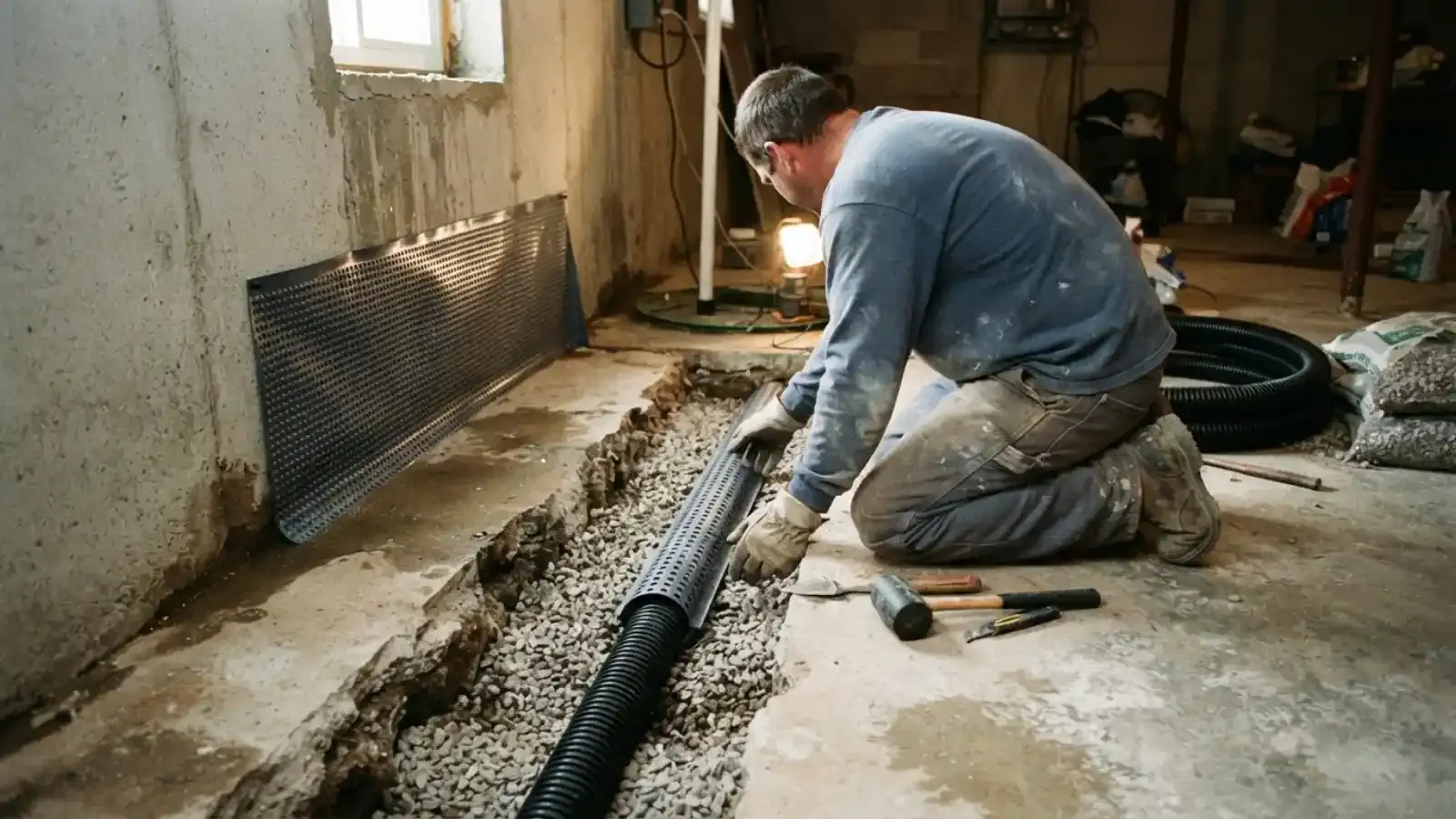
A perimeter drain along the footing collects water at the cove and carries it to a sump pit. The pump moves it out of the house. This is the most common retrofit, since it avoids digging up the yard.
Sump pump and backup
A properly sized pump with a check valve and a battery backup is the core of most systems. See sump pump repair for details on pumps.
Exterior excavation and membrane
Digging to the footing, cleaning the wall, applying a membrane and fresh drain tile. It is the most thorough fix and the most disruptive.
Crack and joint repair
Injected polyurethane or epoxy seals a single leaking crack. It works for isolated cracks, not for general seepage.
Grading, gutters and downspouts
Sloping soil away from the foundation and extending downspouts remove a lot of water before it reaches the wall.
Window well drains
Wells that fill in heavy rain can leak into the basement. A drain to the footing tile or a cover helps.
If water is coming in now, call. We answer around the clock and can help with the pump while we plan a lasting fix.
Why flood history matters in Hanover Park
The Cook County hazard mitigation plan names flood-prone areas in Hanover Park, including the Anne Fox School Creek area, the Barrington Road and Irving Park Road corridor, the Highlands subdivision and Schick Road. Federal flood declarations covered the area in 1972, 1973, 1986, 1987, 1993, 2013 and 2023. If your home sits near one of those areas, treat drainage as a routine part of home care.
Most homes here were built in the 1960s and 1970s. Foundations from that period are often poured concrete or block without modern membranes, and footing drains may be clay tile that has silted or collapsed. That is why a house can stay dry for decades and then leak after a wet spring.
| Problem | Most likely cause | Typical response |
|---|---|---|
| Water at the cove joint after rain | Hydrostatic pressure at the footing | Interior perimeter drain and sump. |
| One wet crack in the wall | Foundation movement | Injection repair, and check the grading. |
| Damp walls all around | Poor grading or clogged gutters | Regrade, extend downspouts, then reassess. |
| Window well fills and leaks | Poor well drainage | Drain connection and cover. |
| Floor drain backs up | Sewer or storm line issue | Camera inspection of the line. |
What the project looks like
Inspection and moisture check
We look at the walls, the floor, the pit, the grading outside and the gutters. We ask when the water shows up, since the pattern tells us the source.
Plan and scope
We explain the options, what each one fixes and what it does not. Interior drains and exterior work are different in cost and disruption.
Installation
For an interior system, we cut the slab along the wall, lay the drain, set the pit and pump, and patch the floor.
Test and follow up
We run water through the system, check the pump and explain maintenance, including yearly pit testing.
What affects basement waterproofing cost
Waterproofing scope varies a great deal between a single crack and a whole-house system. These are the main factors.
Method
Interior drain and sump, exterior excavation and membrane, and crack injection each differ widely in labor and materials.
Length of wall involved
The more linear footage of drain or membrane, the more time and material the job takes.
Foundation type and condition
Poured walls, block walls and cracked or bowed sections change how the work is done.
Access and finishes
Finished basements, tight corners and landscaping outside raise the effort.
Pump and backup
Pump size, battery backup and alarms are separate line items in the design.
Standard homeowners policies often exclude groundwater seepage and may require a separate endorsement for sump or sewer backup. Ask your insurer what yours covers.
Call and tell us what you see. We will explain the options and the scope before any work starts.
Permits and village rules
Interior drain and sump work involves plumbing, and Hanover Park requires contractors to be registered with the village. Permits go through the Inspectional Services Division. Changes to grading near a floodplain also fall under the village flood damage prevention ordinance, which adopts the DuPage County stormwater rules by reference.
If dampness comes with sewage smell or floor drain backups, the cause may be underground piping. A sewer inspection with a camera can rule that in or out before you commit to wall work. Pipe leaks inside the slab are a separate case for leak detection.
Codes and standards that apply
County hazard planning for Hanover Park lists the Anne Fox School Creek area, Barrington and Irving Park Road, the Highlands subdivision and Schick Road as flood-prone. The village flood damage prevention ordinance (Chapter 38, Article VII) applies to work in mapped flood areas.
Common questions
Heavy rain saturates the soil and raises the water table. Pressure at the footing pushes water through the cove joint or through cracks. A perimeter drain and sump give that water a path out.
The county mitigation plan lists the Anne Fox School Creek area, the Barrington and Irving Park Road corridor, the Highlands subdivision and Schick Road as flood-prone. Even outside those areas, older foundations can seep. A site visit tells us more than a map.
Paint can slow damp on a surface, but it cannot hold back water pressure. It often peels as moisture pushes through. Use it only after the water source has been dealt with.
Almost always. The drain collects water, and the pump removes it from the pit. A check valve and a battery backup keep the system working during storms.
It removes the moisture that mold depends on. Existing mold has to be cleaned or removed separately. Keep humidity below about 50 percent and monitor for return.
Plumbing portions such as sump discharge and drain tile connections can. Hanover Park's Inspectional Services Division issues permits, and the contractor must be registered with the village.
Dry out your Hanover Park basement
Call to schedule an inspection. If water is coming in now, we answer around the clock.