
What Drives the Cost of Replacing a Water Heater in Hanover Park
The final bill depends on the type of heater, its size, the venting and drain setup, and the permit. Here is how each factor moves the cost.
The short answer: five factors set the cost
Replacing a water heater costs more or less depending on five things: the type of unit, the tank size or flow rate, the venting or electrical work, the permit and inspection, and the condition of the old connections. A like-for-like tank swap sits at the simple end. A move to tankless or a hybrid heat pump unit adds equipment and installation work.
We do not print prices in a blog post, because two Hanover Park basements rarely need the same work. What we can do is show you which line items move the total, so a quote makes sense when you get one.
Tank, tankless and hybrid: how they compare
| Type | Why it costs what it does | What an older house may need |
|---|---|---|
| Standard tank, gas | Lowest equipment cost. Vent pipe, gas line and drain valve must meet code. | Old flue pipe, rusted gas shutoff or a missing sediment trap |
| Standard tank, electric | Simple swap if the circuit is sound. Larger tanks need more floor space. | Proper breaker size and wire condition |
| Tankless, gas | Higher unit cost. Needs stainless or PVC venting and a larger gas supply. | Bigger gas line, condensate drain, new vent route |
| Hybrid heat pump | Higher unit cost. Saves energy but needs air space and a condensate drain. | Room with enough open air and a floor drain nearby |
The U.S. Department of Energy says heat pump water heaters can use two to three times less electricity than conventional electric resistance units, because they move heat instead of making it. It also says they need roughly 1,000 cubic feet of surrounding air and a space that stays between 40 and 90 degrees. A cramped, cold corner of a basement can rule one out.
A hybrid unit also cools the room around it and drips condensate, so it needs a drain path. In a finished basement without a floor drain, that adds plumbing work. If you are weighing tankless instead, see how we handle a tankless water heater upgrade, including the gas and venting changes it brings.
Lifespan and the anode rod
Most storage tanks are built around a sacrificial anode rod. The rod is a metal core that corrodes first, so the steel tank wall does not. Once the rod is used up, the tank itself starts to rust from the inside. Checking the rod every few years can add useful life to a heater, and it is a cheap part compared with a new tank.
Manufacturers and utilities commonly cite roughly a decade or a bit more for a tank and longer for tankless units, but treat that as a range, not a promise. A tank that is leaking at the seam cannot be repaired. When a heater is past its middle years and the repair list grows, water heater replacement often costs less over time than another repair.
- Look for rust-colored water from only the hot taps.
- Listen for popping or rumbling when it heats, which points to sediment.
- Check the base of the tank for dampness or a rust ring.
- Note the age on the data plate, which encodes the build date.
How hard water adds to the bill
Hard water leaves calcium and magnesium scale on heating surfaces. In a tank, scale piles up as sediment on the bottom and makes the burner work harder. In a tankless unit, scale coats the heat exchanger and narrows the passages, which is why those units need periodic flushing.
Hanover Park gets Lake Michigan water through the Northwest Suburban Municipal Joint Action Water Agency. The village reports we found list no hardness figure. Streamwood's 2023 report for the same Chicago supply says 8 grains per gallon, so moderately hard water is a fair assumption. That means a scale plan, such as an annual flush or a softener, is part of the real cost of any new heater.
Do not wait for a flood
A heater that leaks from the tank body, not a fitting, is finished. Shut off the cold supply and the gas or power, then call. Water damage to a finished basement costs far more than the heater.
Tell us the make, age and fuel type and we will walk through the factors for your house.
Size, fuel and fuel conversion
Tank size follows the number of people and bathrooms, and how often showers overlap. A bigger tank costs more to buy and takes more floor space. Going smaller to save money can backfire when two showers run at once.
Changing fuel is its own project. Gas to electric needs a new circuit. Electric to gas needs a gas line and a proper flue. For fresh equipment on a new location, our water heater installation work covers the supply, drain and venting layout from scratch.
Permits and who may pull them in Hanover Park
Hanover Park's Inspectional Services Division, at 2121 Lake Street, handles plumbing permits. The village requires plumbing contractors to be registered, with an IDPH 055 contractor registration, an IDPH 058 plumber licence and a Letter of Intent. Permits are not issued until the contractor is registered.
In practice, a permit means the work gets inspected against the Illinois Plumbing Code, 77 Ill. Adm. Code 890, which covers venting, relief valve piping and drain connections. Ask any installer whether the permit is included in the quote. Skipping it can leave you with unverified gas work and trouble when you sell.
Source type: Village of Hanover Park Inspectional Services Division and Illinois Plumbing Code
What the inspection checks
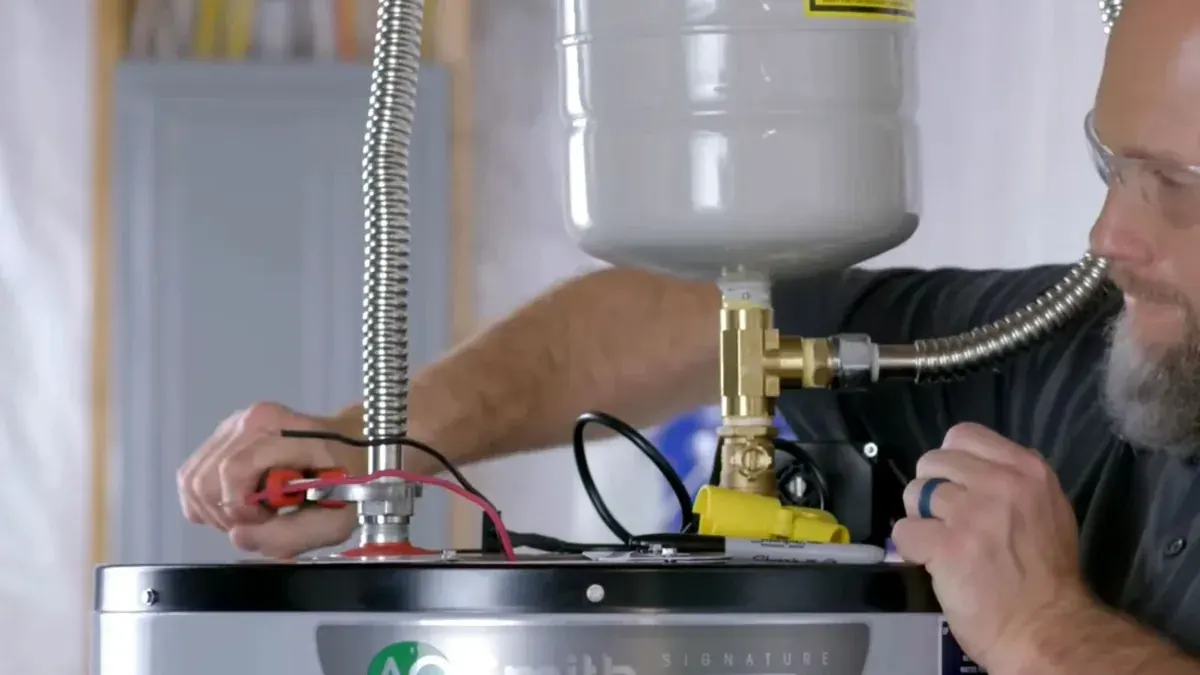
An inspector looks at the safety items first. These include the temperature and pressure relief valve and its discharge pipe, the gas connection and vent, the expansion tank where one is needed, and seismic or floor strapping where required. Each failed item adds a return visit, so a clean first install saves money.
If your hot water is already failing, our Schaumburg and Streamwood neighbors run into the same aging heaters in 1960s and 1970s homes, and the same permit steps apply.
Common questions
It can be, if the room has about 1,000 cubic feet of air and stays between 40 and 90 degrees most of the year. A small, cold utility closet usually does not qualify. You also need a place for the condensate to drain.
Look at age, leaks and repair history together. A leak at the tank body means replacement. A bad thermostat, element or pilot part on a younger tank is usually worth repairing.
Yes. Tankless units often need a larger gas line, new venting and a condensate drain. The unit itself also costs more than a tank of similar capacity.
Policies commonly cover sudden water damage from a burst tank but not the heater itself or damage from slow leaks. Read your policy or ask your agent before you file.
The water is treated and safe to drink, but reports for the same Chicago supply show moderate hardness. Scale builds up over time, so flushing the tank each year and checking the anode rod helps the heater last.
Illinois lets owner-occupants do their own work with a Homeowner Plumbing Affidavit, but gas and venting mistakes are dangerous. Check with Inspectional Services about the permit first.
Get your water heater plan in writing
Call the shop and we will go over type, venting, permit and scale concerns for your home.