
Main Sewer Line Inspection in Hanover Park: What the Camera Shows
A camera inspection runs a waterproof lens through your sewer to show roots, cracks, bellies and breaks, so repairs are based on what is really there.
What a sewer camera inspection is
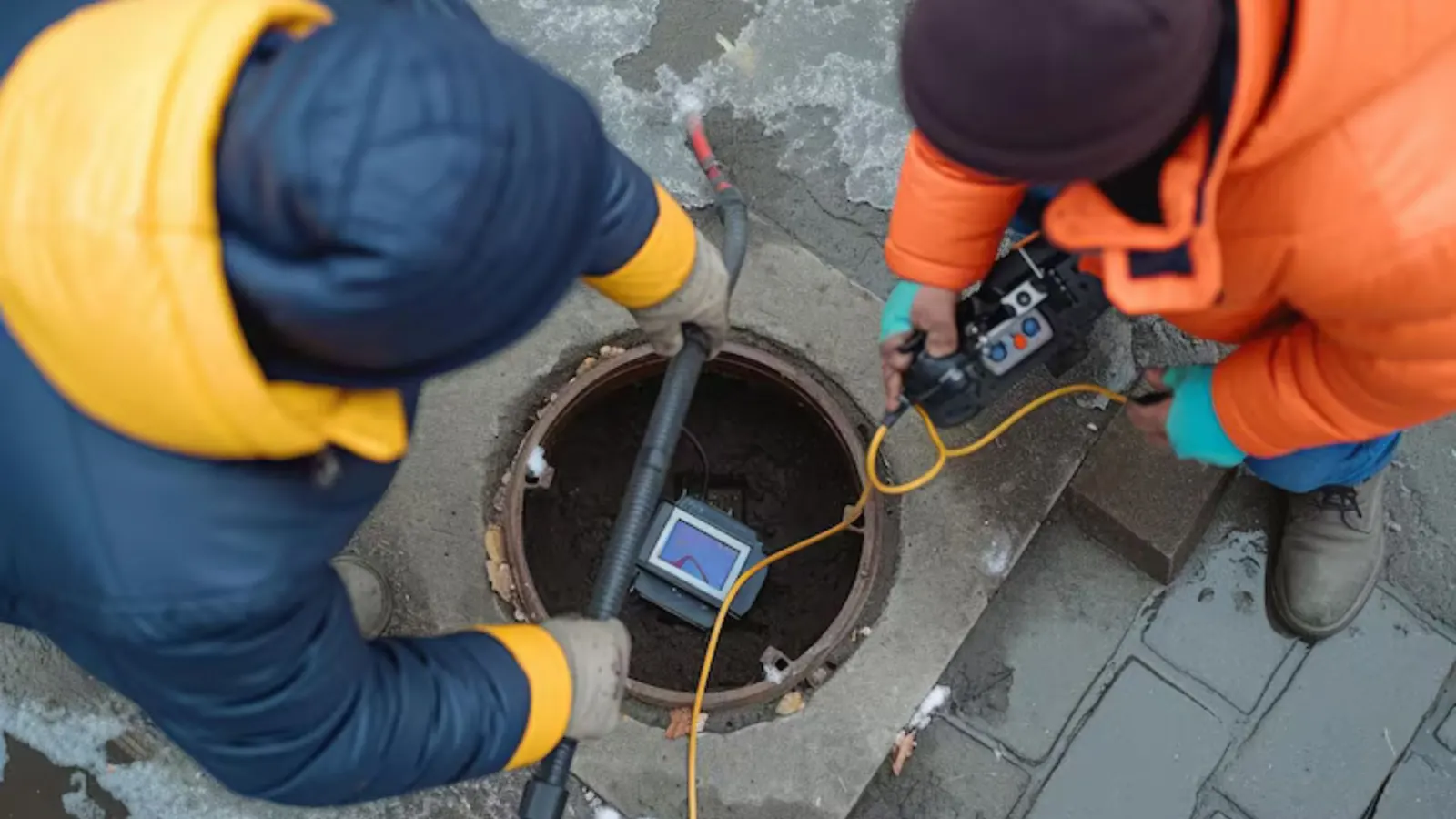
A main sewer line inspection feeds a small waterproof camera on a flexible cable into your building sewer, usually through a cleanout. You watch the live picture on a monitor while the operator records it. The goal is to see the pipe from the inside, find defects and mark their location.
It is worth doing when you have slow drains in several fixtures, repeated backups, gurgling toilets or you are buying a house. For problems that point to the main line, see our sewer inspection service.
What the camera can find
| What you see | What it usually means | Likely next step |
|---|---|---|
| Roots entering at joints | Pipe joints are open and seeking water | Cut roots, then consider lining or repair |
| Belly or low spot | Pipe has settled and holds standing water | Dig and re-grade the section |
| Offset joint | Two pipe sections have shifted apart | Spot repair or replacement |
| Cracks or breaks | Pipe has failed from age, soil movement or load | Repair or replace the damaged run |
| Scale or grease build-up | Pipe is narrowed on the inside | Descale or jet the line |
| Collapsed section | Clay or cast iron has fallen in | Excavation |
Clay tile and cast iron pipe, common in homes built before the 1970s, tend to show root intrusion and flaking inside. Orangeburg fiber pipe, used in some mid-century houses, can look collapsed or oval. The recording lets you see all of this, not just hear about it.
How the inspection works, step by step
Locate the cleanout
The operator finds the cleanout, which may be inside near the foundation or outside in the yard. If there is none, the camera may go in through a toilet flange or roof vent.
Feed the camera
The cable is pushed through slowly. A built-in transmitter lets the operator track depth and position from above.
Record the run
The video is saved with distance markers. Notes show where any problem sits relative to the house.
Review together
You see the footage and learn what is cosmetic and what needs work. A clean pipe with only minor wear may need nothing.
Some inspectors cannot pass a heavy blockage. In that case, the line must be cleared first. Our sewer line cleaning work often comes before the camera when the pipe is packed with roots or grease.
Call us to book a recorded camera inspection and get a clear look at your main line.
What an inspection does not tell you
A camera shows the pipe interior but cannot say how the soil outside is behaving. It cannot see a leak that is just a hairline unless water is moving through it. It cannot measure the pipe's strength. These limits mean a serious finding is often followed by a second look or a dye test.
Also remember the camera only covers the run it reaches. If the line connects to a shared lateral or a municipal main past the property, the village handles the sections in its right of way.
How to prepare for the inspection
Clear access to the cleanout, indoors or out. Move stored boxes away from basement walls near the foundation. Keep pets inside while the crew works. If the cleanout cap is stuck, tell the operator in advance so the right tools come along.
Avoid running laundry or long showers right before the visit. High flow in the line makes it harder for the camera to see the pipe floor. Let the operator know about any past backups, recent cleanings, or work done on the line, since each detail helps interpret the video.
After the inspection, ask for a short written summary with distances to each problem. Distances from the cleanout let a repair crew dig in the right place and save you from open trenches you do not need.
Signs your main line needs a look
- Slow drains in more than one fixture at once
- Gurgling toilets after the washer drains
- Sewage smell in the basement or yard
- Wet, sunken or unusually green patches over the sewer path
- Floor drain backing up during heavy rain
One slow sink is usually a local clog. Several fixtures acting up together point to the main line, and that is the moment a camera pays for itself.
Village rules that shape the next step
Hanover Park has specific rules for sanitary sewer repairs. Work within 5 feet of a building needs a licensed plumber, and a JULIE dig number is required before digging. The building sewer must be at least 48 inches deep, and a 6 inch pipe is required within 6 feet of the building. A cleanout must be brought to grade about 5 feet out, and cellular-core PVC is not allowed.
Relining a sewer requires descaling and a recorded camera inspection first, and it is not allowed on defective pipe. The village asks for 24 hours notice for an inspection, and right-of-way work is approved and inspected by village Engineering. The practical meaning is that your video is the paper trail. Keep the footage, because it may decide whether you can reline or must dig.
Source type: Village of Hanover Park sanitary sewer repair requirements
What to do with the results
If the camera finds a minor issue such as light scale or a few fine roots, routine cleaning may be enough. If it finds a belly, offset or break, you will probably need sewer line repair by excavation or a trenchless method where it is permitted. Get the work scoped from the recording, and ask about permits before the crew starts.
Homeowners in Bartlett and Schaumburg with 1960s and 1970s houses deal with the same pipe types, so the same camera steps apply. In Hanover Park, much of the housing dates to the 1960s and 1970s, so clay and cast iron building sewers are common enough to inspect before they fail.
How often should you inspect
If your house is more than 40 years old and has mature trees near the sewer, a camera check every few years is sensible. After any backup, inspect before you pay for a repeat cleaning. When you buy a home, schedule it during due diligence so you see problems before closing.
Codes and standards worth knowing
Village rules for sanitary sewer repair, which any inspection finding feeds into, include a JULIE dig number (800-892-0123), a 48 inch minimum depth and a recorded camera inspection before relining.
Common questions
A typical run on a single home takes a short visit, longer if the line needs cleaning first. The exact time depends on access and how clear the pipe is.
Ask for it. A recorded copy helps with repair planning, quotes and village paperwork, and it is useful for a future buyer.
No. The cable is flexible and the lens is rounded. The risk of damage comes from a pipe that is already failing, which is the reason to look.
Yes. It shows grease, scale, roots or a foreign object, and tells you whether cleaning will help or the pipe has a structural problem.
Village sewer rules call for the cleanout to be brought to grade about 5 feet out from the building. If yours is missing or buried, the inspector may need another access point, and a new cleanout can be added during repairs.
See inside your sewer line
Call to book a recorded camera inspection and talk through the results.