
DIY Exterior Basement Waterproofing in Hanover Park, IL
Some basement water problems start in the yard and cost little to fix. Others need a professional. Here is how to tell which is which.
What DIY can and cannot do
Homeowners can handle the surface side of basement water: grading, gutters, downspouts, and window wells. These steps keep rain away from the foundation. They fix many damp walls and seepage after a heavy storm.
DIY cannot cure hydrostatic pressure under the slab, a cracked foundation, or a failing drain tile. If water comes up through the floor or rises fast, it is no longer a weekend job. The sections below sort the two.
Check the grading first
The soil should slope away from the foundation. A common rule is about six inches of drop over the first ten feet. Settled backfill near the house often creates a bowl that points water at the wall.
Add compacted clay-rich soil in layers, not loose topsoil, and finish with a gentle slope. Keep soil at least a few inches below siding and sill plates. Mulch, planters, and patios that tilt toward the house should be corrected.
Gutters and downspouts
A roof sheds a lot of water during a storm. If gutters overflow or downspouts dump at the foundation, the soil there turns to mud. Clean gutters in spring and fall, and fix sagging sections that hold water.
Extend each downspout several feet from the house, or connect it to buried pipe that discharges to a safe spot. Do not point it at a neighbor's yard or onto a shared walkway. Splash blocks are a minimum, not a full fix.
Window wells
Basement window wells collect rain and leaves. A clogged well fills like a bucket and pushes water through the window frame. Clear debris, check the drain at the bottom if there is one, and add a clear cover.
If the well has no drain, it can be tied into the footing drain by a professional. That is not a DIY step in most homes, because it links to the foundation drainage system.
| Fix | Helps with | Does not fix |
|---|---|---|
| Regrading soil | Surface runoff at walls | Water rising under the floor |
| Downspout extensions | Roof water at the foundation | Cracked foundation walls |
| Gutter cleaning and repair | Overflow near the house | High groundwater |
| Window well cover and drain | Rain pooling at windows | Failed footing drain |
| Sealing cracks outside | Minor wall seepage | Active structural movement |
| Sump pump check | Weak pump or dead battery | Undersized or failed drainage system |
Sealing the wall from outside
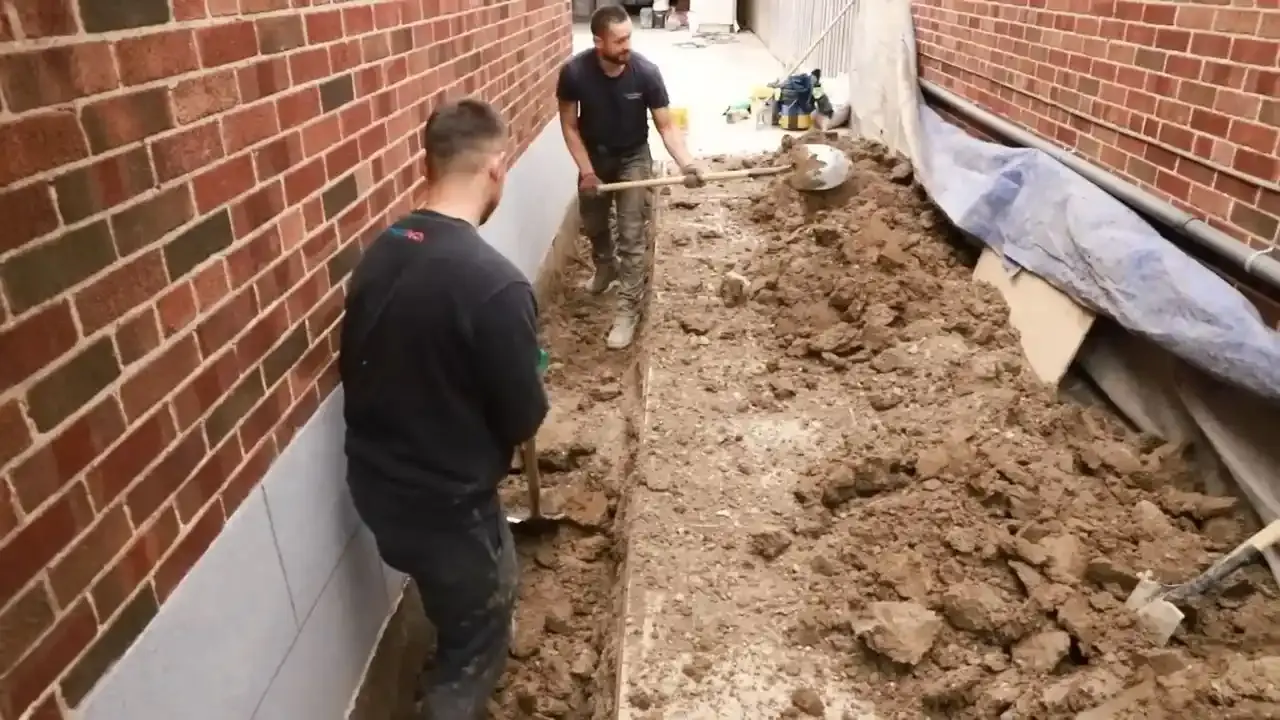
Exterior sealing means digging down, cleaning the wall, and applying membrane or coating. It is heavy work and can undermine the footing if done wrong. Shoring, utilities, and soil depth all matter.
Most homeowners should hire out wall excavation. A hand-dug trench next to a foundation can collapse, and buried gas, electric, and water lines may be close. Call JULIE before any digging, no matter how small.
Dig safely
Call JULIE before digging. Marking underground utilities is required, and it prevents damage and injury.
If floors are wet or the pump is running nonstop, do not wait for a dry spell. Call us any hour.
When DIY is not enough
- Water enters at the floor-wall joint or through the slab.
- Cracks are widening, or walls are bowed or leaning.
- The sump pump runs constantly or cannot keep up.
- Water returns after every storm even with good grading.
- Mold or a musty odor persists after drying.
These signs point to drainage, groundwater, or structure. A plumber can test the sump, check the footing drain, and recommend basement waterproofing that fits the cause. If the pump is the weak link, sump pump repair is the first stop.
Flood history in Hanover Park
What the village record means for your basement
Cook County's hazard mitigation plan lists flood-prone areas in Hanover Park including Anne Fox School Creek, Barrington and Irving Park Road, the Highlands subdivision, and Schick Road. The village has federal flood declarations in 1972, 1973, 1986, 1987, 1993, 2013, and 2023, plus storm events in 2007, 2008, 2010, and 2013.
If your home sits near one of those areas, treat basement protection as ongoing. Keep the sump pump on a battery backup, clear window wells before storms, and move stored items off the floor. The village's flood damage prevention ordinance, adopted in 2012, also means building work in a floodplain may need extra review. Call Inspectional Services before major exterior changes.
Source type: Cook County Hazard Mitigation Plan, Hanover Park annex, and Village of Hanover Park
Landscaping choices that help
Plant water-loving shrubs a few feet from the wall, not against it. Roots hold soil, and thirsty plants soak up runoff. Avoid deep irrigation next to the foundation, because constant moisture adds to the load on basement walls.
Rain barrels and rain gardens can also reduce what reaches the house. Direct overflow from a barrel away from the foundation, never toward it. Check that any hardscape tilts away and has clean, open joints.
Keep window wells free of mulch and plants. Gravel at the bottom of a well helps water drain, and a clear cover keeps leaves and snow out of it.
Ground conditions and your yard
Clay-heavy soil drains slowly and holds water against the wall after a storm. That is common across the Chicago suburbs. Gravel-backed trenches or a dry creek bed can carry surface water around the house to a safe discharge point.
Keep driveway and sidewalk joints sealed where they meet the foundation. Water that slides along a driveway slab can end up at the basement wall. A bead of exterior-grade sealant costs little and takes an afternoon.
Photograph the basement walls after each storm. A dated record shows whether damp spots are spreading, and it helps a plumber diagnose the cause faster.
Storage and cleanup habits
Keep boxes on shelves and furniture on risers so a small leak does not ruin belongings. A cheap water alarm on the basement floor warns you before the damage spreads.
A seasonal checklist
Walk the outside in spring and fall. Look for low spots, clogged gutters, loose downspouts, and soil that has settled. After storms, check the basement within a day for new damp patches.
Test the sump pit by pouring in a bucket of water. The pump should start, empty the pit, and shut off. If it does not, deal with it before the next rain. Nearby homes in Streamwood and Bartlett face the same spring storm risk.
Common questions
You can handle grading, gutters, downspouts, and window wells. Digging out the foundation wall is risky and usually best left to professionals.
A common guideline is about six inches of drop over the first ten feet. Always slope away from the wall.
Yes. Call JULIE so underground utilities are marked before you dig.
Rain raises soil moisture and groundwater around the foundation. Poor grading, full gutters, and a weak sump pump make it worse.
No. A sump removes water that reaches the footing drain. Exterior work keeps surface water away from the wall in the first place.
The county's plan lists Anne Fox School Creek, Barrington and Irving Park Road, the Highlands subdivision, and Schick Road as flood-prone.
Need help with a wet basement?
Our crew answers around the clock in Hanover Park. Call and describe where the water enters.