
Boiler circulator pump repair: signs and fixes
If your boiler fires but the radiators or baseboards stay cold, the circulator pump is a prime suspect. It moves hot water through the loop.
What the circulator pump does
In a hot water heating system, the boiler heats the water and the circulator pump pushes it through the pipes. The pump sits on the piping near the boiler, usually with a motor housing and two flanges. When it quits, the boiler can run while the house stays cold.
Some homes from the 1960s and 1970s heat with hydronic baseboard or cast iron radiators, though many others use furnaces. If you have a boiler, the circulator is one of the parts most likely to fail on an older system.
Symptoms of a failing circulator
- The boiler is hot, but the radiators and baseboards are cold.
- The supply pipe near the boiler is hot and the return pipe is cool.
- A humming, grinding, or squealing noise from the pump.
- The pump housing is very hot, or the motor feels warm but nothing moves.
- Water drips from the pump flanges or the motor seal.
- The boiler shuts off on high temperature and short cycles.
A humming pump that does not spin usually has a seized impeller or a bad motor. A noisy pump may have worn bearings or air trapped in the housing. Each cause leads to a different repair.
| Symptom | Likely cause | What happens next |
|---|---|---|
| Hums but does not spin | Seized shaft or dead motor | Replace the circulator |
| Rattling or gurgling | Air in the system | Bleed the air, check the air eliminator |
| Grinding or squealing | Worn bearings | Replace the circulator |
| Leaking at flanges | Failed gasket or O-ring | Replace the gasket or pump |
| No sound, no heat | No power or failed relay or capacitor | Test the wiring and controls |
| Boiler overheats and shuts off | No water flow through the boiler | Check the pump first, then the valves |
Simple checks before you call
- Confirm the thermostat is calling for heat and the switch at the boiler is on.
- Check the breaker, and look for a tripped switch on the boiler.
- Feel the pump motor carefully. If it is warm and vibrating, it is running.
- Listen for a hum with no spin or for air gurgling in the pipes.
- Look for wet spots or rust streaks at the flanges.
Do not open the boiler fill valve or bleed the system if you are unsure. The water can be very hot and the pressure is higher than the household supply. A plumber can bleed and test it safely.
Call and we will check the pump, controls, and system pressure.
What a pump replacement involves
The plumber shuts off the power and closes the isolation valves, or drains the system if there are none. The old pump is unbolted from its flanges and the gaskets are replaced. The new pump goes in with the arrow pointing in the direction of flow.
Then the system is refilled and purged of air, and the controls are tested under load. Many circulators can be swapped for a modern model that fits the same flange pattern. The right pump depends on the size of the system, so a plumber should match the specification.
Why older boiler homes need extra care
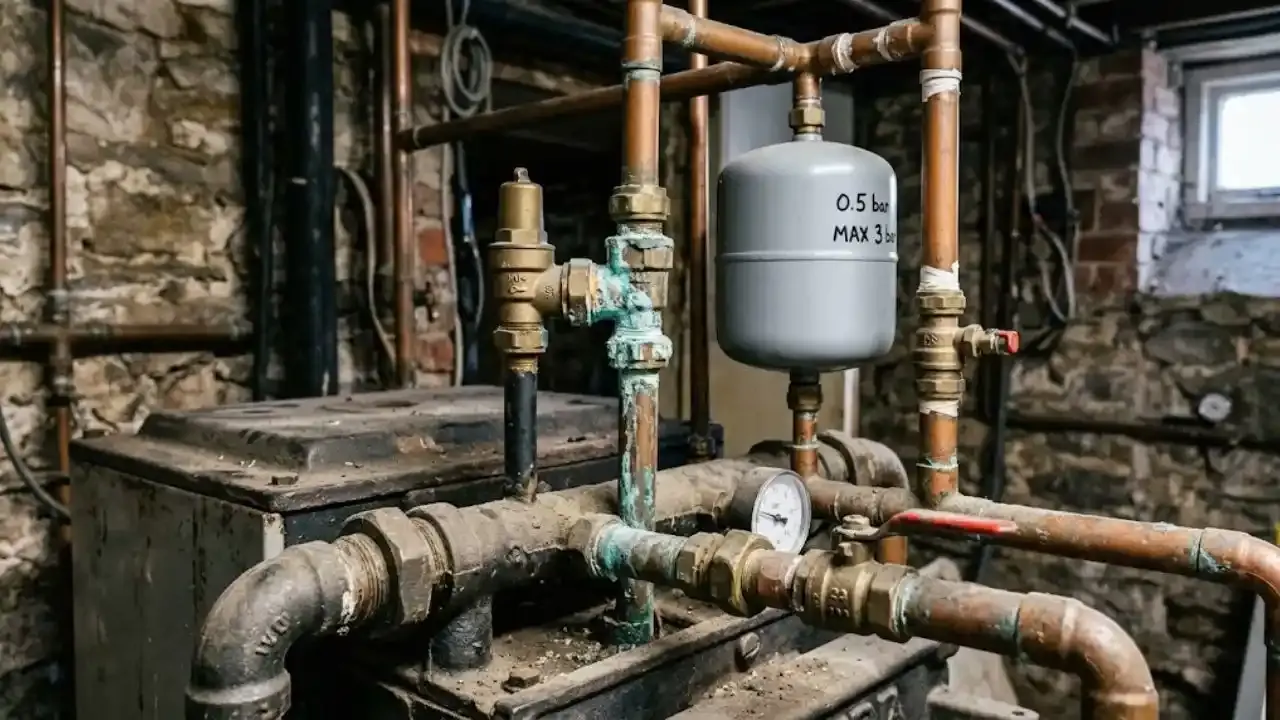
Older systems collect sludge, magnetite, and rust that wear out pump parts. Old gate valves may not close, which turns a pump swap into a full system drain. A boiler repair visit should include a look at those valves and the expansion tank.
A leaking flange or a weeping valve is a small leak that may grow. If you spot water around the boiler, use leak detection to confirm the source before it damages the floor or wiring.
We serve boiler homeowners in Streamwood and Bartlett too, where many houses date from the same decades.
Pump size, speed, and the loop it serves
A circulator is sized by how much water it moves and how much resistance the pipes create. A pump that is too weak leaves far rooms cold. A pump that is too strong can make noise in the pipes and wear valves.
Many older systems use a three-speed pump set to a middle speed. A modern variable-speed unit adjusts itself to the demand and often runs quieter. Your plumber will pick the model after checking the flange size and the length of the loop.
Preventing the next failure
Have the boiler serviced every year before the heating season. Check the system pressure on the gauge and look for slow leaks that let in fresh water. Fresh water carries oxygen, and oxygen rusts the loop.
If the water in the system is dark and gritty, a flush may be due. Removing sludge protects the new pump. Ask whether a dirt separator is practical for your piping.
Why air in the loop gets mistaken for pump failure
A pump that is spinning but sounds like running water may only be fighting trapped air. Air collects at high points, in baseboard runs, and around the pump housing. The pump cannot push water past an air lock.
Bleeding the radiators or running the purge valve often restores heat. If air returns every few days, a leaking fitting or a failed air eliminator is the likely cause. That is worth fixing, because constant air also causes rust inside the boiler.
A pump that runs dry will overheat and wear out. Watch the pressure gauge, and call a plumber if it keeps dropping.
Ask the plumber to show you the old pump after the swap. A seized shaft or a rusted impeller confirms the diagnosis. It also helps you judge whether the rest of the loop needs attention soon.
A pump replaced before the first cold week is far easier than one replaced during it. Schedule service in early fall if yours is noisy.
Why a heat failure matters in Hanover Park
The Cook County hazard mitigation plan records a winter storm on December 5, 2010, with single-digit lows in the Hanover Park area. That kind of cold is what a hydronic system is built for.
If your circulator quits on a night like that, pipes along exterior walls and in crawl spaces can freeze within hours. Call at the first sign of a cold radiator, and keep cabinet doors open to warm pipes.
Source type: Cook County Multi-Jurisdictional Hazard Mitigation Plan, Hanover Park annex
Codes and standards worth knowing
Plumbing work in Illinois follows the state standard, the Illinois Plumbing Code (77 Ill. Adm. Code 890). Pump replacement should also follow the boiler maker's service guidelines, and a licensed plumber should handle anything that opens the water-side piping.
Common questions
Many circulators run for a decade or more, but dirty water and power surges shorten that. A noisy pump or a leaking seal is a sign it is near the end.
It is possible for an experienced homeowner, but the boiler holds hot water under pressure. Miswired controls or trapped air can cause a no-heat call or damage.
Air trapped in the loop, a closed zone valve, or a stuck impeller can all stop circulation. A plumber checks each in turn.
It depends on the control setup. Many pumps run only when the thermostat calls for heat, while others run constantly with a different control.
A slow drip can wait a day if you catch the drip with a pan. A spray, a puddle, or no heat in freezing weather needs a same-day call.
Keep faucets dripping on exterior walls and open cabinet doors under sinks. Then call for service. Single-digit lows, like those in December 2010, can freeze pipes quickly.
Need a plumber in Hanover Park?
Call and a licensed local plumber will pick up around the clock.