
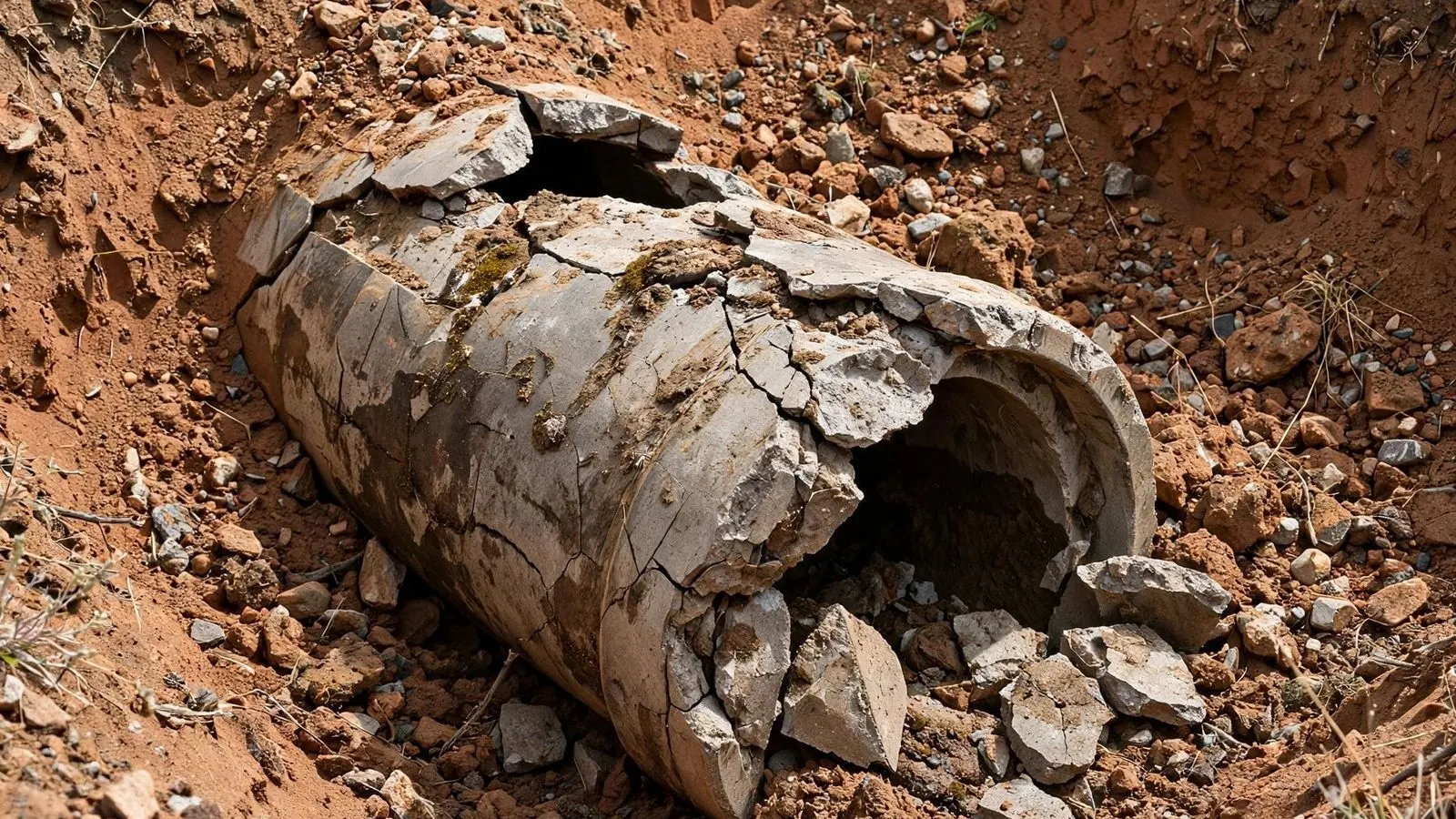
Pull-in-Place Pipe Lining in Hanover Park, IL
Pipe lining repairs a damaged sewer line from the inside without digging a full trench. It only works on the right pipe.
What pull-in-place lining is
Pull-in-place lining is a form of cured-in-place pipe, or CIPP. A felt or fiberglass tube soaked in resin is pulled into the old pipe through an access point. It is inflated, pressed against the pipe wall, and hardened with steam, hot water, or light.
The result is a new pipe inside the old one. It seals cracks, small gaps, and root entry at joints. It does not fix a collapsed or badly offset pipe. That is why a camera inspection comes first.
Where lining makes sense
Lining works well on clay or cast iron lines with cracks, leaking joints, or repeated root intrusion. It suits lines under driveways, patios, and landscaping where digging would be costly. The pipe must still hold its shape and run in a mostly straight line.
Many older homes have clay tile or cast iron sewers that have aged for decades. Roots find the joints, and scale narrows cast iron. Lining can add years of life where full replacement would tear up a finished yard.
Where lining does not work
- A collapsed pipe with no clear path for the liner.
- A pipe with a bellied section holding standing water.
- A heavily offset joint where two pipes no longer line up.
- A line with sharp bends the liner cannot follow.
- A pipe too defective to be cleaned and inspected first.
In those cases, excavation and sewer line repair with new pipe is the right path. A recorded camera run shows which category your line falls into.
How a lining job goes
Locate and inspect
A camera runs the line to find cracks, roots, offsets, and the exact length. The video is recorded.
Clean the pipe
Roots, scale, and debris are removed by cutting or jetting. The liner needs a clean wall to bond.
Prepare the liner
The tube is cut to length and saturated with resin, then fed through an access point.
Pull and inflate
The liner is pulled into place and inflated so it presses into the old pipe.
Cure
Steam, hot water, or ultraviolet light hardens the resin into a rigid pipe.
Reopen and inspect
Service connections are cut open from inside and a final camera run confirms the result.
A typical job takes a day or less once access is set. Cure time depends on pipe diameter, length, and resin. Do not use the plumbing until the crew says the liner has cured.
| Question | Pipe lining | Dig and replace |
|---|---|---|
| Yard disruption | Small access pits | Open trench |
| Pipe condition needed | Intact, not collapsed | Any condition |
| Fixes roots at joints | Yes, joints are sealed | Yes, new pipe |
| Fixes offsets and bellies | No | Yes |
| Camera inspection required | Yes, before and after | Recommended |
| Village rules | Descaling and recording required | Permit and inspection |
A camera inspection answers it. Call us any hour and we will arrange one.
Lining and your Hanover Park sewer
What the village requires before relining
The Village of Hanover Park sets specific rules for sanitary sewer repair. Relining requires descaling of the pipe and a recorded camera inspection, and it is not allowed on defective pipe. Work within five feet of the building must be done by a licensed plumber, and you must call for an inspection with 24 hours of notice.
In practice, that means a lining quote needs a camera video first, and a pipe that fails the video cannot be lined and must be replaced. Ask your plumber to show you the recording. The same dig number and pipe depth rules apply when a repair needs excavation.
Source type: Village of Hanover Park sanitary sewer repair rules
Digging also needs a JULIE dig number before any work starts. Right-of-way work is approved and inspected by the village Engineering department. Your plumber should handle both, but confirm who is pulling the permit.
Signs your sewer line may need attention
Slow drains in several fixtures, gurgling toilets, and sewage odors in the basement all point to a main line problem. Repeated clogs every few months suggest roots or a broken section, not just a bad day.
Wet or sunken patches in the yard along the sewer path are another clue. So is a floor drain that backs up when the washer runs. Catching these early often leaves lining on the table as an option.
Waiting until the pipe collapses removes that choice. A line that still has its round shape can often be saved. One that has caved in must be dug up.
Material and fit
Liners are available in several resin types and wall thicknesses. The installer picks the size based on the pipe diameter and the loads above it. A liner that is too thin may deform. One that is too thick narrows the pipe and cuts flow.
The finished pipe is smooth, so flow often improves compared with rough cast iron. Lateral connections are reopened from inside. A good job leaves no ridges that catch paper.
What happens to the old pipe
The old pipe stays in the ground. The liner becomes the working pipe, and the host pipe provides support around it. That is why the host pipe must still hold its shape. A fully collapsed line has nothing left to carry the liner.
Because the diameter shrinks slightly, a lined 4 inch pipe flows a bit less than before in theory. In practice, the smooth wall often makes up for it compared with rough, scaled cast iron.
Lining also does not remove the need for a proper cleanout. The village rules call for a cleanout to grade about five feet out from the building. If yours is missing, the crew can add one while the line is open.
Questions to ask a plumber
Ask to see the pre-lining video, the cleaning method, the liner material, and how connections are reopened. Ask whether a post-lining video will be given to you and the village inspector. If the crew cannot show the camera work, move on.
A related step is sewer inspection, which is how most homeowners learn what condition the line is in. For roots and buildup before lining, hydro jetting clears the pipe wall.
We serve Bartlett and Roselle as well, where older clay lines also lead to relining questions. The camera finding, not the neighborhood, decides whether lining is possible.
Codes and standards worth knowing
Village rules state that relining needs descaling and a recorded camera inspection and is not allowed on defective pipe. Repair work in the right-of-way is approved and inspected by village Engineering.
Common questions
Cured liners are built to last for decades when installed on suitable pipe. The life depends on resin, installation, and how the old pipe was prepared.
Yes. In Hanover Park, relining requires a recorded camera inspection and descaling, and it is not allowed on defective pipe.
It seals the cracks and joints that roots use to enter. Roots can still grow against the outside, but they cannot get in.
Yes. Cabling and gentle jetting are fine, although high pressure should be set by someone who knows liners.
The crew will tell you when the resin has cured. Cure time depends on the method, pipe size, and length.
The village requires inspection with 24 hours of notice, and right-of-way work is approved and inspected by village Engineering.
Thinking about relining your sewer?
We answer around the clock in Hanover Park. Call and we will start with a camera inspection.